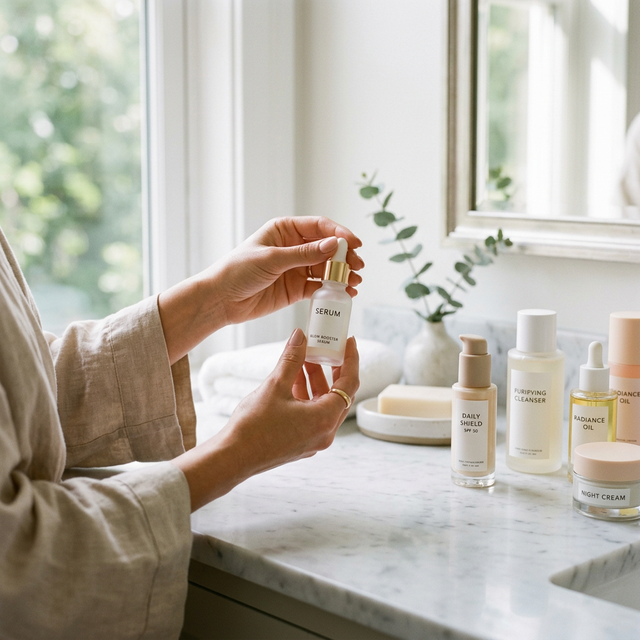
Most people with a skincare routine are doing more right than wrong. But even a well-intentioned routine can be undermined by a handful of small, consistent errors — things that seem harmless or even sensible, but quietly cancel out the results you're working towards.
Here are the 7 most common morning skincare mistakes, and exactly what to do instead.
Mistake 1: Over-Cleansing in the Morning
Unless you've had a heavy-duty overnight mask or significant sweating during sleep, your skin doesn't need a full cleanse in the morning. During the night, your skin repairs itself and produces natural oils — those oils are beneficial, not something to strip away.
What happens when you over-cleanse: You disrupt the skin barrier, signal the skin to produce even more sebum to compensate (especially in oily skin types), and create the tight, dry feeling that many people mistake for "clean skin."
What to do instead: If you have normal to dry skin, rinse with cool or lukewarm water in the morning — that's it. If your skin is oily or you use heavy overnight treatments, a gentle micellar water or low-pH cleanser is all you need.
Tip: Save your active cleanser (with acids or exfoliants) for the evening routine, not the morning.

Mistake 2: Skipping Moisturizer Because Skin Feels Oily
This is one of the most common misconceptions in skincare, particularly among people with oily or combination skin: "I don't need moisturizer — my skin is already producing enough oil."
Hydration and oil are not the same thing. Sebum (oil) is your skin's natural lubricant. Hydration refers to water content within skin cells. You can have oily skin that is simultaneously dehydrated — and dehydrated skin actually triggers more sebum production to compensate.
What to do instead: Use a lightweight, non-comedogenic moisturizer every morning — even if your skin is oily. Look for ingredients like hyaluronic acid, glycerin, or niacinamide. These hydrate without heaviness and won't clog pores.
Mistake 3: Applying SPF Only on Sunny Days
UV radiation is present every single day — regardless of cloud cover, season, or whether you're indoors near a window. UVA rays (the ones responsible for photoageing) penetrate clouds and glass with ease. They also penetrate deep into the dermis where they break down collagen.
Statistically, the majority of visible skin aging — wrinkles, texture changes, hyperpigmentation — is caused by accumulated UV exposure, most of which happens incidentally: commuting, sitting near windows, running errands.
What to do instead: Apply SPF 30–50 every morning as the last step of your routine. No exceptions. This is the single highest-impact habit you can adopt for long-term skin health.
Important: If you're using any actives in your routine — vitamin C, niacinamide, AHAs, retinol (the night before) — SPF is not optional. It's the active that protects all the others.
Mistake 4: Applying Products in the Wrong Order
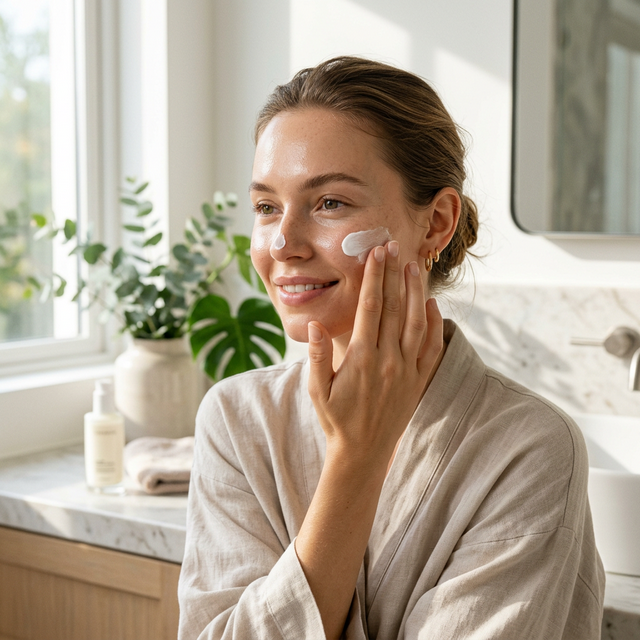
Skincare product order matters because skin can only absorb what it's exposed to. If you apply a heavy cream before a serum, the serum has no meaningful access to the skin — it sits on top of the occlusive barrier and largely goes to waste.
The correct order for a morning routine:
- Cleanser (or water rinse)
- Toner / essence (if used)
- Serum (thinnest texture, most active ingredients)
- Eye cream
- Moisturizer
- SPF (always last)
The rule of thumb: thinnest to thickest texture, most active to least active.
Mistake 5: Using Active Ingredients That Cause Photosensitivity in the Morning
Some actives that are excellent at night are a poor choice for a morning routine — not because they're harmful, but because UV exposure deactivates or irritates alongside them.
Morning: proceed with caution
- AHAs / BHAs (glycolic acid, salicylic acid): Increase photosensitivity. If you use them in the AM, rigorous SPF is mandatory.
- Retinol: Use at night only. Degrades in UV light and increases photosensitivity.
- Benzoyl peroxide: Can react with some sunscreens; AM use requires care.
Morning: safe and encouraged
- Vitamin C: Antioxidant effects enhance SPF protection. Ideal AM ingredient.
- Niacinamide: No photosensitivity concerns, great all-day use.
- Hyaluronic acid, peptides, ceramides: No restrictions.
Mistake 6: Skipping Neck and Décolletage
The face gets all the attention. Meanwhile, the neck and chest — which have thinner skin and similar sun exposure — get nothing. This is how women end up with a face that looks dramatically different from their neck.
The skin on the neck and décolletage has fewer sebaceous glands, less natural moisture, and shows signs of aging and UV damage faster than the face.
What to do instead: When you apply your moisturizer and SPF, extend them down to the neck and chest. It takes five extra seconds. The long-term difference is significant.
Mistake 7: Not Waiting Between Layers
This one is subtle but real: applying products too quickly one on top of another doesn't give each one time to absorb and reach the right skin layer. You end up pilling (product balling up on the skin surface) and reduced efficacy of actives.
What to do instead: Wait 30–60 seconds between each layer. You don't need a timer — use that time to brush your teeth, make coffee, choose an outfit. By the time you come back, your serum has absorbed and your moisturizer can go on properly.
Tip: This waiting time also gives pH-sensitive ingredients (like vitamin C or AHA serums) time to work at their optimal acidic pH before a higher-pH moisturizer alters the environment.
FAQ
Should I cleanse my face every morning?
Not necessarily. If you have normal to dry skin, a cool water rinse is sufficient. Cleansing twice daily with cleanser is often more than necessary and can damage the barrier over time.
What order should I apply skincare products in the morning?
Thinnest to thickest: cleanser → toner → serum → eye cream → moisturizer → SPF. SPF always goes last.
Can I use retinol in the morning?
It's not recommended. Retinol degrades with UV exposure and increases photosensitivity. Use it in your evening routine for best results and safety.
Is SPF really necessary indoors?
Yes. UVA rays penetrate windows and are present whether it's sunny or cloudy. If you're near a window during the day, SPF applies.
Do I really need to wait between product layers?
Yes — 30 to 60 seconds makes a measurable difference in absorption and prevents pilling. It also helps pH-sensitive actives work properly.
Bottom Line
Skincare doesn't have to be complicated — but it does need to be consistent and sequenced correctly. Fixing one or two of these morning mistakes can make more difference than adding three new products to your routine.
Start with SPF every day without exception. That alone puts you ahead of most people.
Related reading: