Facial skincare is not merely a daily cosmetic routine, but a scientifically grounded system designed to preserve your skin's health, prevent premature aging, and maintain a resilient skin barrier. To achieve visible and lasting results, you do not need an overwhelming number of products. Instead, success lies in understanding your skin's physiological needs and addressing them consistently with the right ingredients.
In this comprehensive guide, we will break down the essential steps of a healthy skincare routine, learn how to select textures based on your skin type, and discuss how to integrate advanced treatments for optimal results.
Step 1: Cleansing — The Foundation of Skin Health
Cleansing is the first and most critical stage of any skincare regimen. Throughout the day, the surface of your skin accumulates excess sebum, environmental pollutants, dust, heavy metals, makeup, and sunscreen filters. Neglecting proper cleansing leads to clogged pores, micro-comedones, acne flare-ups, and a dull complexion.
You should cleanse your face twice daily:
- Morning: Removes metabolic byproducts excreted by the skin overnight, as well as remnants of your evening skincare products.
- Evening: A deeper cleanse to clear away the buildup of makeup, pollution, and sunscreen. If you wear heavy makeup or water-resistant SPF, we highly recommend a two-step cleansing method: start with a cleansing oil or balm to dissolve oil-based impurities, followed by a gentle water-based gel or foam.
[!IMPORTANT]
Always opt for cleansers with a physiological pH (around 5.5). Highly alkaline soaps or harsh foaming agents strip the skin's hydrolipid mantle, leading to dehydration, irritation, and leaving the skin vulnerable to bacterial colonization.
Step 2: Moisturizing — Restoring Barrier Function
Water is vital for maintaining skin elasticity, smoothness, and cell renewal. Dehydrated skin quickly loses its tone, showing fine dehydration lines and suffering from slow cellular repair. A high-quality moisturizer does not just deliver hydration to the epidermis; it forms a protective occlusive layer that minimizes transepidermal water loss (TEWL).
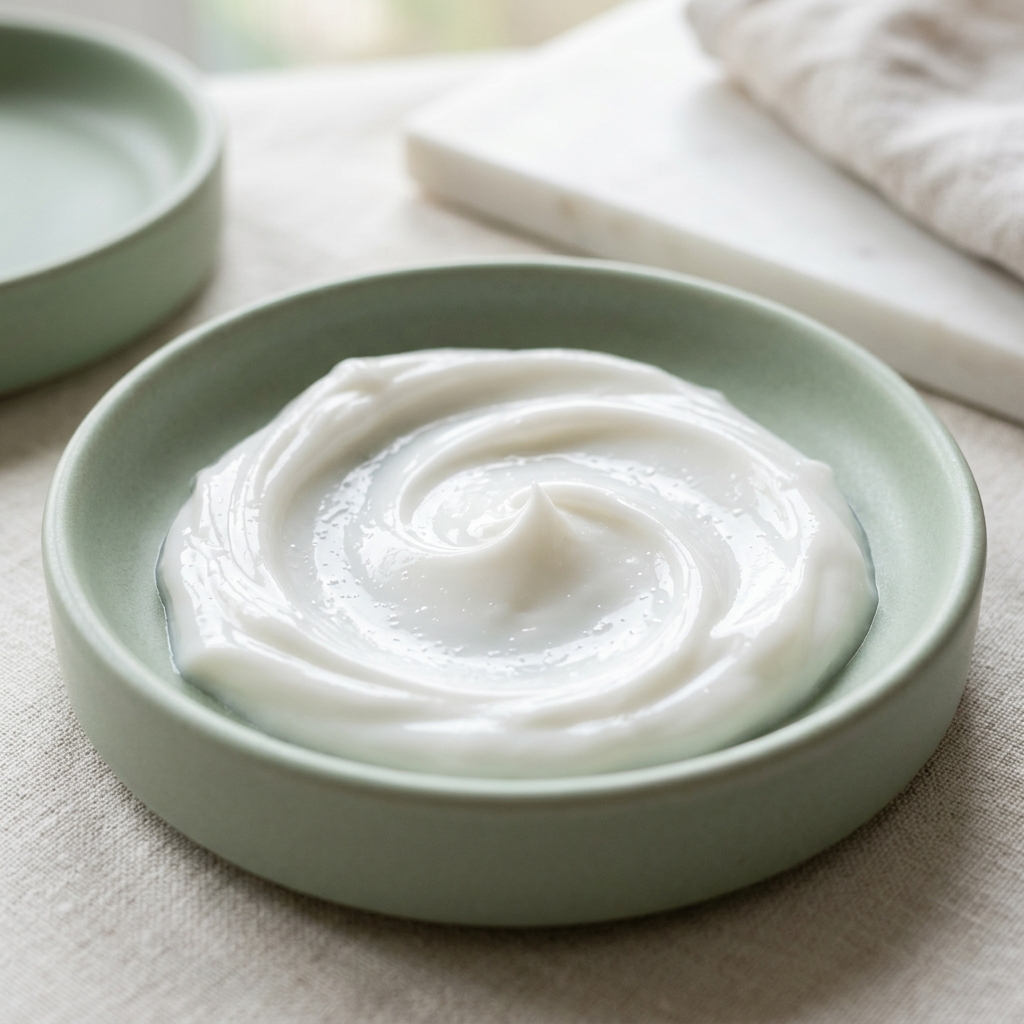
A well-formulated moisturizer should contain a blend of three key components:
- Humectants (draw water in): Hyaluronic acid, glycerin, urea, and amino acids.
- Emollients (smooth and fill intercellular gaps): Plant oils, squalane, and fatty acids.
- Physiological Lipids (repair the barrier): Ceramides and cholesterol.
Choose your moisturizer texture carefully based on your skin type:
| Skin Type | Characteristics | Recommended Texture | Key Ingredients |
|---|---|---|---|
| Dry | Tightness, flakiness, lack of natural shine | Rich, thick cream | Ceramides, shea butter, squalane, fatty acids |
| Oily | Enlarged pores, excess shine across the face | Lightweight gel, emulsion, or fluid | Niacinamide, zinc PCA, hyaluronic acid |
| Combination | Oily T-zone, normal to dry cheeks | Lightweight balancing cream or gel-cream | Hyaluronic acid, panthenol, centella asiatica |
| Sensitive | Prone to redness, itching, reactive to weather | Hypoallergenic physiological cream | Panthenol, allantoin, squalane, beta-glucan |
[!TIP]
Apply your moisturizer to slightly damp skin immediately after cleansing or toning. This locks in moisture and makes application smoother. For advanced skin rejuvenation, pair your moisturizer with targeted serums. To learn more about how active ingredients work at a cellular level, read our in-depth article on Skin Longevity and Cellular Biohacking.
Step 3: Sun Protection — The Ultimate Anti-Aging Step
Sunscreen is the single most effective anti-aging product available. Approximately 80% of visible skin aging—including wrinkles, hyperpigmentation, loss of elasticity, and broken capillaries—is caused by chronic exposure to ultraviolet (UV) radiation. This process is medically termed photoaging.
- UVB rays cause sunburn and are most intense during the summer months.
- UVA rays remain constant year-round, penetrate through clouds and window glass, and reach deep into the dermis to break down collagen and elastin fibers.
For this reason, daily broad-spectrum sun protection is mandatory whenever the UV Index is 2 or higher.
[!WARNING]
Apply a generous amount of sunscreen—approximately 2 mg per square centimeter of skin (the two-finger rule). Applying too little reduces the protection factor exponentially. Reapply every 2 to 3 hours during extended outdoor activity.
Advanced Care: Serums, Exfoliation, and Masks
Once your basic routine (cleanse, moisturize, protect) is established, you can introduce active ingredients to target specific skin concerns:
- Exfoliation (1–2 times a week): Avoid harsh physical scrubs with abrasive particles (like walnut shells). Instead, use gentle chemical exfoliants like alpha-hydroxy acids (AHAs), beta-hydroxy acids (BHAs), or enzyme powders. They dissolve dead skin cells, refine skin texture, and help subsequent products absorb better. Discover how to safely use home masks in our guide on homemade face masks.
- Targeted Serums:
- Morning: Antioxidants like Vitamin C or resveratrol to combat free radicals and brighten the skin. For a full breakdown of skin nutrition, check out our guide on vitamins for skin.
- Evening: Retinoids to accelerate cell turnover and reduce fine lines, or niacinamide to regulate sebum and strengthen the skin barrier.
- Professional Treatments: For deeper structural aging concerns, supplement your home routine with clinical treatments. Read our detailed analysis of the most effective procedures in anti-aging procedures.
Conclusion
The ideal skincare routine is built on simplicity, consistency, and patience. Using too many products simultaneously can overwhelm the skin and trigger irritation.
Start with a gentle cleanser, a reliable basic moisturizer, and a daily sunscreen. Once your skin adapts to this foundation, introduce active treatments one at a time and monitor how your skin responds. Healthy, glowing skin is the cumulative result of smart daily habits.