Homemade face masks have long been a favorite method for maintaining fresh, radiant skin between visits to a professional esthetician. When prepared using high-quality, whole ingredients, DIY masks offer an excellent, natural boost to your weekly skincare routine. However, working with raw ingredients requires a basic understanding of skin physiology and strict hygiene standards to ensure you protect your skin's delicate epidermal barrier rather than disrupt it.
In this guide, we will share scientifically backed recipes for dry, oily, mature, and dull skin, analyze the cellular benefits of their primary ingredients, and outline crucial safety protocols.
How Face Masks Work: The Science of Occlusion
The primary mechanism behind face masks is temporary occlusion. By applying a thick layer of a nutrient-dense mixture to the face, you reduce the rate at which water evaporates from the skin's surface. This process increases the temperature of the epidermis by a fraction of a degree, dilates the pores, and enhances the penetration of active ingredients.
Unlike daily moisturizers, which are formulated for sustained hydration and barrier maintenance, masks serve as targeted treatments. They are designed to deliver rapid results—whether that means sloughing off dry flakes, absorbing excess oil, calming redness, or brightening a dull complexion before a major event.
Targeted Mask Recipes
To ensure your homemade mask is beneficial, you must select ingredients that align precisely with your current skin type and immediate skin needs.
1. Ultra-Nourishing Mask (For Dry and Flaky Skin)
This formula delivers essential lipids directly to the epidermis, smoothing dry patches and relieving tightness.
- Ingredients:
- 1 tablespoon raw liquid honey (a natural humectant that attracts water molecules).
- 1 tablespoon extra-virgin olive oil (an emollient rich in squalene and fatty acids).
- 1 fresh egg yolk (contains lecithin and skin-identical lipids).
- Preparation: Whisk all ingredients in a sterile bowl until a smooth, uniform emulsion is formed. Apply a generous layer to the face (avoiding the immediate eye area) and leave on for 15–20 minutes. Rinse thoroughly with lukewarm water.
[!TIP]
Immediately after rinsing your mask, apply your daily moisturizer to slightly damp skin to seal in the hydration. For a detailed breakdown of moisturizing techniques, refer to our guide on skincare basics.
2. Sebum-Balancing Clay Mask (For Oily and Congested Skin)
This mask gently purifies pores, reduces excess shine, and calms minor inflammation without stripping the skin's protective lipid mantle.
- Ingredients:
- 2 tablespoons cosmetic clay (white kaolin or green bentonite).
- 2 tablespoons freshly brewed, cooled organic green tea (loaded with vascular-calming antioxidants).
- 1 teaspoon pure aloe vera gel (soothes and hydrates).
- Preparation: Mix the clay and green tea until a smooth paste forms, then stir in the aloe vera. Apply a uniform layer to the T-zone or congested areas. Leave on for 10 minutes.
[!WARNING]
Never let a clay mask dry completely until it cracks or flakes. When clay dries fully, it begins to draw vital moisture out of the epidermis, causing dehydration and triggering a rebound effect where your skin produces even more oil. Mist the mask with thermal water to keep it damp.
3. Gentle Brightening & Exfoliating Mask (For Dull Skin)
This recipe uses mild natural acids and soothing grains to lift away dead skin cells and reveal a brighter tone.
- Ingredients:
- 1 tablespoon plain, unsweetened yogurt (contains natural lactic acid, a mild AHA).
- 1 tablespoon finely ground colloidal oatmeal (anti-inflammatory, calms skin).
- 1 teaspoon raw honey.
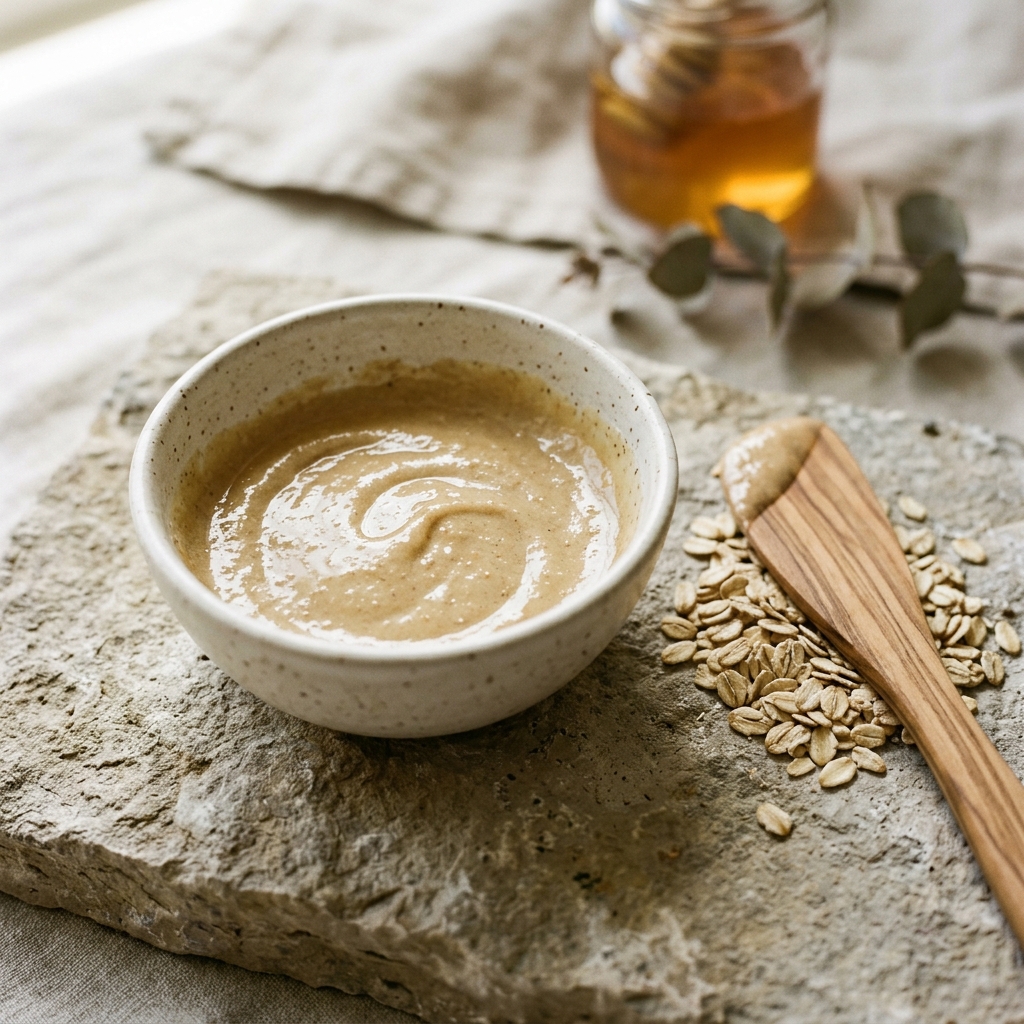
- Preparation: Combine all ingredients into a soft paste. Smooth over the face and let rest for 15 minutes. Before rinsing, gently massage the skin in circular motions for a very soft physical polish. Rinse with warm water.
Nutritional Ingredient Profiles
Before blending your mask, understand the biochemical properties of these common kitchen ingredients:
| Ingredient | Primary Benefit | Best Suited For | Target Effect |
|---|---|---|---|
| Raw Honey | Humectant & Antibacterial | Dry, dehydrated, acne-prone | Draws moisture, calms breakouts |
| Cosmetic Clay | Absorbent & Remineralizing | Oily, congested, mixed | Extracts impurities, refines pores |
| Yogurt / Kefir | Lactic Acid Exfoliant | Dull, sun-damaged, dry | Softly dissolves dead cells, brightens |
| Avocado | Lipid Replenishment | Mature, very dry, depleted | Softens, protects barrier, nourishes |
| Colloidal Oat | Anti-inflammatory agent | Sensitive, irritated, itchy | Calms redness, strengthens defense |
Crucial Safety Rules for DIY Skincare
Just because an ingredient is edible does not mean it is safe for topical application. Raw ingredients are not purified in a sterile lab and can cause contact dermatitis or disrupt skin pH.
- Perform a Patch Test: Before applying any homemade recipe to your face, apply a small dab of the mixture to the inside of your elbow or behind your ear. Leave it for 15 minutes and wait to ensure no redness, itching, or swelling occurs.
- Avoid Harsh Household Acids: Never put pure lemon juice, apple cider vinegar, baking soda, or raw garlic on your face. These ingredients have extreme pH levels that can cause severe chemical burns, strip the skin barrier, or induce phototoxic reactions (phytophotodermatitis) when exposed to sunlight.
- Strict Hygiene: Prepare your masks in clean bowls with clean utensils, and use them immediately. Because homemade mixtures contain no preservatives, bacteria multiply rapidly. Discard any leftovers.
- Support Your Skin Globally: External treatments perform best when supported by a diet rich in essential micronutrients. Check out our guide on vitamins for skin and explore the cutting edge of cellular health in Skin Longevity and Cellular Biohacking.
Conclusion
Homemade masks are a wonderful, cost-effective way to pamper your skin when used with proper scientific guidelines. Tailor your ingredients to your skin's immediate needs—using clay to purify, yogurt to exfoliate, and honey with oils to nourish. Keep your preparations hygienic, avoid harsh ingredients, and always test for allergies before application.
When your skin suffers from acute dehydration or barrier exhaustion that DIY kitchen ingredients cannot safely address, upgrading to a professional clinical treatment—such as the salon-grade CHRISTINA Line Repair Hydra Orchid Hydration Mask—delivers encapsulated hyaluronic acid and rare orchid bio-lipids deep into the dermis without kitchen contamination risks.