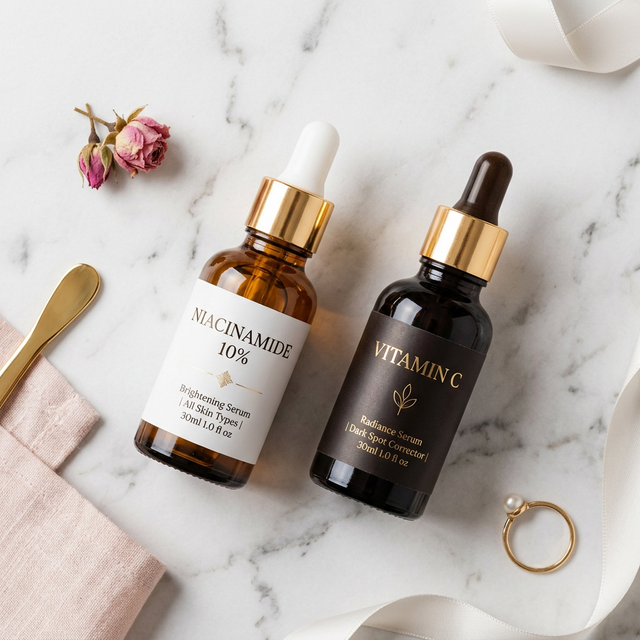
Can you use niacinamide and vitamin C together? If you browse skincare forums or meticulously read ingredient labels, you have likely encountered the strict warning that these two actives simply do not mix. This outdated advice urged consumers to keep them completely separate. However, modern formulation science tells a radically different story—and understanding it could transform your daily routine.
The Myth of Incompatibility
This myth stems from decades-old research suggesting that niacinamide and ascorbic acid react to form nicotinic acid, a compound known to cause severe skin flushing and erythema.
In theory, this chemical reaction sounds alarming. In reality, it requires highly specific, extreme conditions:
- Critical concentrations of both pure L-Ascorbic Acid and niacinamide
- Prolonged heat exposure (sustained temperatures above 40°C)
- Extended contact time
None of these conditions occur during standard skincare application. Furthermore, modern serums frequently use stable vitamin C derivatives rather than pure L-Ascorbic Acid, rendering the risk of adverse interactions entirely obsolete.
The Science: A landmark 2005 study by Cosmetics & Toiletries confirmed that nicotinic acid conversion under real-world cosmetic conditions is negligible—far too minute to trigger visible redness or irritation.
The Science Behind Niacinamide
Niacinamide, or vitamin B3, reigns as one of the most extensively researched and versatile actives in dermatology. At optimal concentrations of 2% to 10%, it delivers profound cellular benefits:
- Pore Refinement—Visibly minimizes enlarged pores by normalizing sebum production.
- Hyperpigmentation Control—Inhibits melanosome transfer, proactively preventing dark spots from reaching the skin's surface.
- Barrier Fortification—Stimulates ceramide synthesis, effectively reducing Transepidermal Water Loss (TEWL) to lock in vital moisture.
- Inflammation Reduction—Calms redness and provides essential support for acne-prone or rosacea-affected complexions.
Contrary to popular belief, niacinamide is remarkably gentle. It is water-soluble, non-phototoxic, and exceptionally well-tolerated by virtually all skin types—including extremely sensitive profiles.
The Science Behind Vitamin C
Vitamin C operates as the skin's primary antioxidant defender. Whether formulated as potent L-Ascorbic Acid or a modern stable derivative, its action unfolds across three crucial fronts:
Antioxidant Shielding
It aggressively neutralizes free radicals generated by UV exposure and urban pollution, decelerating the oxidative stress that drives premature photoaging.
Collagen Synthesis
L-Ascorbic Acid acts as an indispensable co-factor for the enzymes that cross-link the collagen triple helix. Without adequate vitamin C, collagen production stalls, leading to loss of firmness and deeper wrinkles.
Pigment Inhibition
Vitamin C directly inhibits tyrosinase, the foundational enzyme responsible for melanin synthesis. This mechanism makes it the gold standard for erasing post-inflammatory hyperpigmentation and sun damage.
Crucial Note: Pure L-Ascorbic Acid is inherently unstable and highly susceptible to oxidation when exposed to light and air. You must store these potent serums in dark, airtight containers to preserve their efficacy.
Synergy, Not Incompatibility
Do they cancel each other out? Absolutely not. In synergy, niacinamide and vitamin C create a formidable alliance against dullness and aging:
Benefit
Tone Brightening
Blocks melanosome transfer
Inhibits tyrosinase
Dual-pathway pigment control
Benefit
Anti-Aging Support
Strengthens the barrier and supports ceramides
Supports collagen synthesis
Structural and cellular support
Benefit
Antioxidant Defense
Offers moderate antioxidant support
Delivers potent antioxidant protection
Maximum shield against environmental stress
Benefit
Inflammation Control
Calms redness and supports barrier recovery
Low pH forms can irritate sensitive skin
Niacinamide helps buffer potential irritation
By pairing them, you attack hyperpigmentation through two entirely distinct biological pathways—an impressive clinical result that neither ingredient can achieve alone.
How To Layer Niacinamide and Vitamin C
If you fall into the sensitive skin category or simply prefer a cautious approach, evidence-based dermatology offers two foolproof strategies:
Option 1: The Formulated Combination
The most elegant solution involves purchasing a serum where cosmetic chemists have already combined both actives. These sophisticated formulas utilize advanced stabilizers to prevent any pH interference.
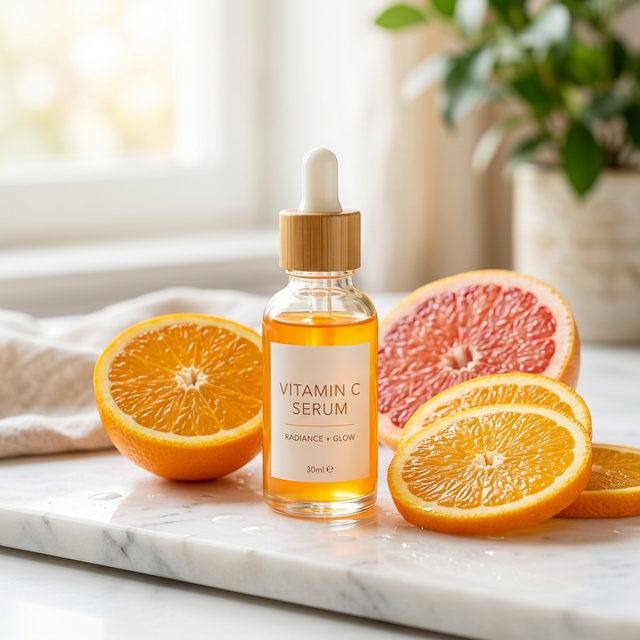
Option 2: The AM/PM Split Routine
This remains the classic protocol for those utilizing pure, highly acidic L-Ascorbic Acid (which demands a pH around 3.5), alongside niacinamide (which thrives at a neutral pH of 5.0 to 6.0).
- Morning Ritual: Vitamin C serum → Moisturizer → Broad-spectrum SPF
- Evening Ritual: Niacinamide treatment (serum or night cream)
This deliberate separation eliminates even theoretical irritation risks, ensuring each active operates at peak performance.
Who Benefits The Most?
Acne-Prone Profiles: Niacinamide masterfully regulates sebum, while vitamin C rapidly fades lingering post-inflammatory erythema (red acne marks).
Hyperpigmented Skin: The dual-inhibition strategy tackles stubborn dark spots faster and more comprehensively than monotherapy.
Mature Skin: Vitamin C rebuilds the structural matrix via collagen synthesis, while niacinamide repairs the barrier and halts TEWL.
Sensitive Skin: Modification is key. Select stable vitamin C derivatives (like SAP, sodium ascorbyl phosphate, or MAP, magnesium ascorbyl phosphate) and cap niacinamide at 5% to reap the rewards without the sting.
Frequently Asked Questions
Can I mix niacinamide and vitamin C from separate dropper bottles myself?
You can, but dermatologists advise against playing kitchen chemist. Layering them sequentially is fine (wait 10–15 minutes if using pure L-Ascorbic Acid), but physically mixing them alters their delicate pH balances.
Will the combination trigger an allergic reaction?
A true allergic reaction to this pairing is exceptionally rare. More often, any resulting redness simply indicates that your skin barrier is reacting to the low pH of the vitamin C serum itself.
When will I observe visible improvements?
Consistency dictates results. You will likely notice a healthy, revitalized glow within two weeks. For significant fading of hyperpigmentation, commit to 4 to 8 weeks of daily application.
Is this powerful combination safe during pregnancy?
Yes. Both niacinamide and vitamin C rank among the top dermatologist-approved actives for use throughout pregnancy and nursing.
The Bottom Line
The notion that you must strictly separate niacinamide and vitamin C belongs in the archives of skincare history. Modern cosmetic chemistry has thoroughly debunked this myth, proving that when paired correctly, these two stellar ingredients form an unrivaled brightening and anti-aging alliance.
Embrace the synergy. Whether you choose a masterfully formulated combined serum or thoughtfully split them between your morning and evening rituals, introducing both to your regimen will invariably unlock your brightest, most resilient complexion yet.
Related Reading: