
For years, body mass index was treated as the default shortcut for health. But in real-world medicine, where fat is stored often matters more than the number on the scale.
Waist circumference is one of the most practical ways to estimate visceral fat. That matters because visceral fat is tied to insulin resistance, nonalcoholic fatty liver disease, chronic inflammation, and higher cardiovascular risk.
When Waist Size Becomes a Medical Signal
Measure your waist with a flexible tape at the end of a normal exhale, halfway between the lower rib and the top of the hip bone. For most people, that lands slightly above the belly button.
Using World Health Organization (WHO) cutoffs, the general risk zones look like this:
| Risk category | Women | Men |
|---|---|---|
| Low risk | Under 80 cm | Under 94 cm |
| Increased risk | 80–88 cm | 94–102 cm |
| High risk | Over 88 cm | Over 102 cm |
Important: You can fall into a higher-risk waist category even if your body mass index (BMI) still looks "normal."
Waist-to-Height Ratio Is Often More Useful
If you want a more individualized metric, use waist-to-height ratio (WHtR).
The simple rule is this: your waist should be less than half your height.
- below
0.5is generally considered a safer range - above
0.5is a sign to take lifestyle changes seriously - above
0.6is typically considered a high-risk zone
That is why WHtR often gives a clearer picture than body weight alone. It captures body proportions, not just mass.
If you want to put that into practice, our ABSI calculator (A Body Shape Index) and waist-to-hip ratio calculator (WHR) can help you interpret waist-related measurements in a more useful way.

Why Visceral Fat Is Different from Subcutaneous Fat
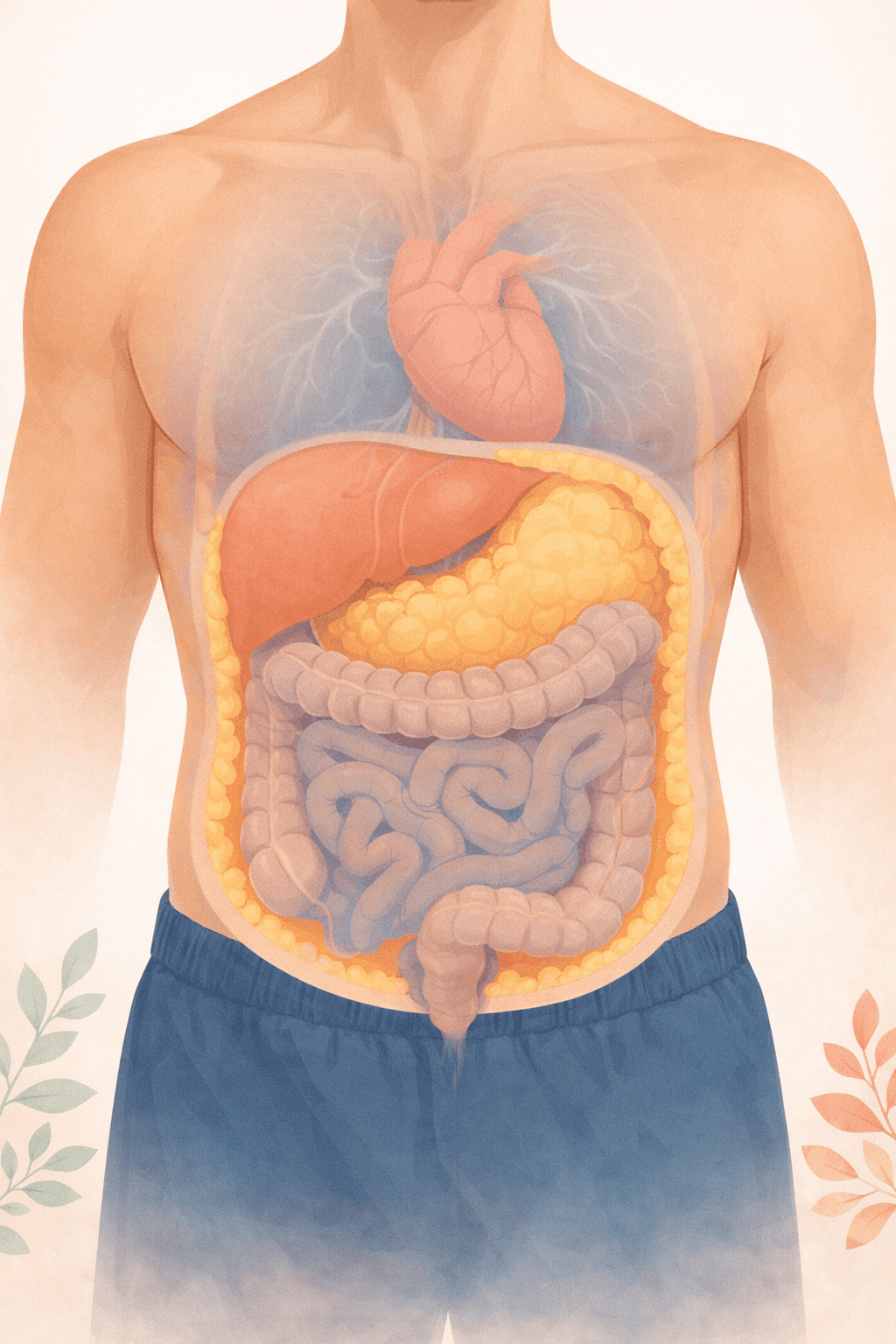
Subcutaneous fat is the fat you can pinch. Visceral fat sits deeper inside the abdomen, surrounding organs such as the liver, pancreas, and intestines.
That makes it metabolically more aggressive. It behaves like an active endocrine organ, releasing signaling molecules and inflammatory cytokines that keep the body in a low-grade inflammatory state.
That is why a growing waistline is not just a cosmetic issue. It can be an early clue that your metabolic age is moving faster than your chronological one.
If your main concern is abdominal risk specifically, the Visceral Fat Calculator is the most relevant tool to check next.
⚖️ Abdominal Fat Health Risk Assessment
Evaluate your body fat distribution and cardiovascular risks using the WHR index (waist-to-hip ratio) and the modern medical A Body Shape Index (ABSI) calculator.
The Main Health Risks
Insulin Resistance and Type 2 Diabetes
Abdominal fat makes body tissues less responsive to insulin. In the early stages, fasting glucose may still look normal, but the pancreas is already working harder than it should.
Over time, that can progress to prediabetes and type 2 diabetes.
Cardiovascular Disease
Abdominal obesity is strongly associated with higher triglycerides, lower HDL cholesterol, and elevated blood pressure.
That combination creates the ideal environment for atherosclerosis, heart attack, and stroke risk to rise.
Nonalcoholic Fatty Liver Disease (NAFLD)
Excess visceral fat often goes hand in hand with fat accumulating inside the liver. Early fatty liver disease may be silent, but it can still progress over time if nothing changes.
Hormonal Disruption
In men, excess abdominal fat is often linked to lower testosterone. In women, it may increase the likelihood of cycle irregularities, insulin resistance, and polycystic ovary syndrome.
Which Lab Markers Make Sense If Your Waist Is Already High
Once waist circumference is above the safer range, it is worth checking what is happening under the surface.
Lipid Panel
Triglycerides. A level above 1.7 mmol/L is one of the most common signs that metabolic dysfunction is already underway.
HDL ("good") cholesterol. Levels below 1.0 mmol/L in men and 1.2 mmol/L in women suggest that vascular protection is dropping.
Glucose and Insulin Metabolism
Fasting insulin. A value above 10–12 µIU/mL, even with normal glucose, can point to early insulin resistance.
HOMA-IR. This common insulin-resistance index above 2.7 is a practical sign that metabolic strain is already present.
HbA1c. Readings from 5.7% to 6.4% fall into the prediabetes range.
Inflammation and Liver Function
High-sensitivity C-reactive protein. Levels above 1–2 mg/L may reflect ongoing vascular inflammation.
ALT and GGT. These liver enzymes often rise alongside fatty liver and abdominal obesity.
What You Can Start Doing Right Now
If waist size is already above 80 cm for women or 94 cm for men, the best first move is not an extreme diet. Start with the basics:
- cut back on added sugar and trans fats
- increase daily walking and general movement
- aim for at least 30 minutes of physical activity most days
- keep protein and fiber intake consistent
- improve sleep and reduce chronic stress where possible
Even modest reductions in waist size can improve insulin sensitivity, blood lipids, and liver markers faster than many people expect.
Bottom Line
Waist circumference is one of the fastest home checks you can do, and it tells you much more than many people realize. It is a simple proxy for visceral fat and a useful early marker of metabolic risk.
If your waist measurement is trending above the safer range, treat that as useful information, not as a cosmetic judgment. It is a good reason to improve diet quality, move more, and check the right labs before bigger problems show up.
Note: This article is for educational purposes and does not replace medical care, especially if you already have high blood pressure, prediabetes, fatty liver disease, or abnormal lipid results.