Makeup has an extraordinary optical superpower: when applied in harmony with facial anatomy and light physics, it can refresh your features more dramatically than an aesthetic procedure. Yet, paradoxically, makeup is also one of the easiest ways to unintentionally add 5 to 10 years to your appearance in minutes.
Crucially, aging makeup mistakes do not only affect women over 45.
- In your 20s and early 30s, copying heavy "full-glam" social media trends—excessive baking, aggressive contour stripes, and thick matte bases—masks natural youthful collagen and robs your skin of its organic glow, making a 22-year-old look 35.
- In your 40s, 50s, and beyond, relying on formulas and techniques that worked in your youth can backfire as dermal collagen drops by ~1% per year (Rohrich & Pessa, 2007), skin thins, and light-scattering properties shift (Jacques, 2015).
The fundamental secret of timeless, age-defying beauty remains universal across all decades: youthful vitality is defined by moisture, soft diffusion, and light reflection—never by heavy coverage, chalky powders, or harsh geometric lines.
Below, we break down the 7 most critical makeup mistakes that add age, with specific, tailored instructions for both young skin (20s–30s) and mature skin (40s–50s+), accompanied by verified dermatological science and high-fashion editorial techniques.

1. The Oxidized & Dark Foundation Trap (The "Aged Tan" Mask)
Why It Adds Age
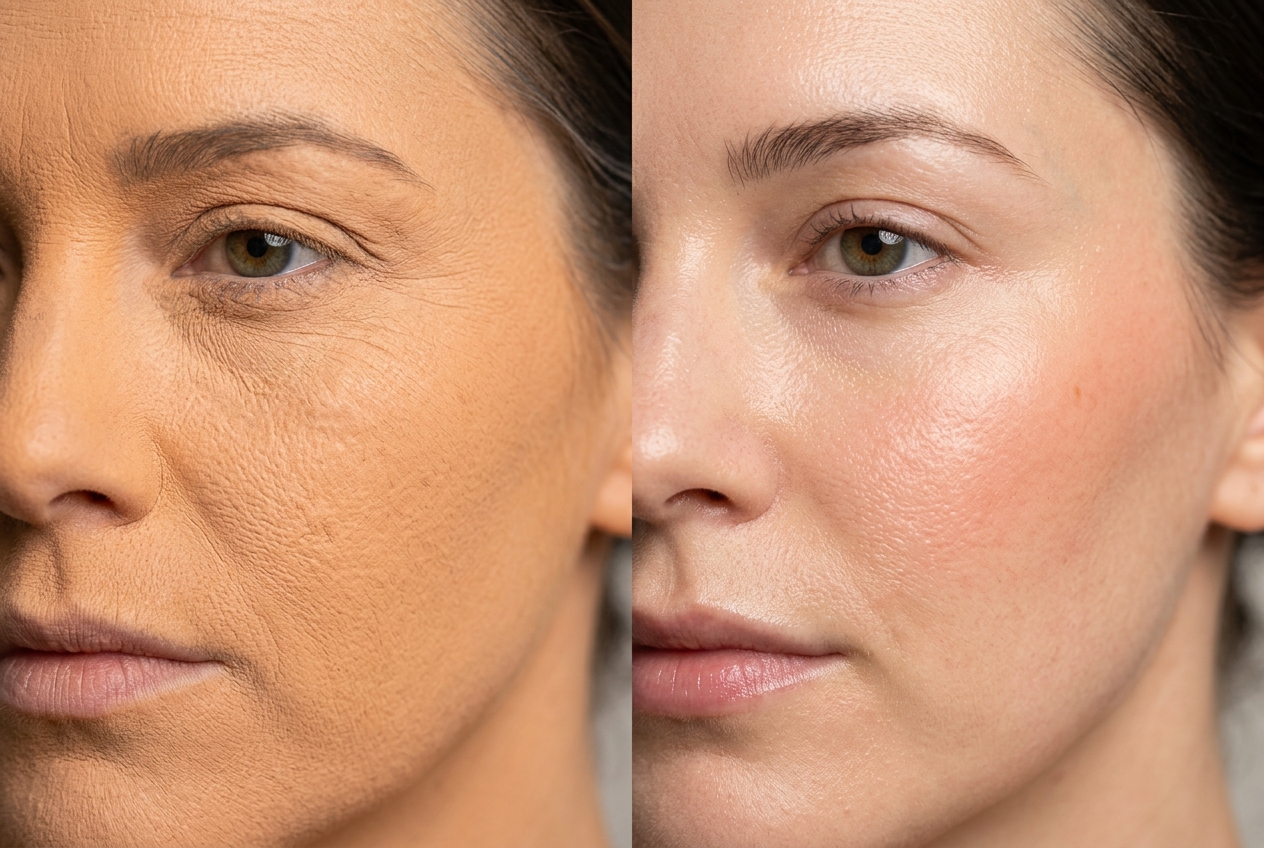
Choosing a foundation 1–2 shades darker or warmer than your natural complexion under the mistaken belief that it creates a "healthy sun-kissed tan" is one of the quickest ways to look older:
- In Your 20s & 30s: A dark or heavy foundation creates a visible disconnect at the jawline, masking natural skin radiance and looking like a heavy theatre mask. Natural oil production oxidizes the formula throughout the day, turning it muddy and orange.
- In Your 40s & 50s+: Mature skin naturally accumulates photo-damage and slight vascular dullness. Heavy warm-orange pigments absorb ambient light rather than reflecting it, exaggerating hollow cheeks and deepening the nasolabial fold.
How to Fix It by Age Group
- For 20s & 30s: Skip full-coverage foundation entirely. Opt for a sheer tinted moisturizer, BB cream, or water-burst skin tint that lets your natural freckles and skin luminosity shine through. Use a pinpoint brush and creamy concealer only on blemishes or redness.
- For 40s & 50s+: Match your foundation strictly to your lower jaw and upper neck. Choose neutral or subtle peach-rose undertones to cancel out gray-sallow dullness. Look for serum foundations enriched with plant squalane or hyaluronic microspheres.
Pro Artist Secret: Mix one pump of hydrating essence or facial oil into your foundation on the back of your hand before application to transform any base into a dewy, breathable veil.
2. Heavy Setting Powder and the "Baking" Trap
Why It Adds Age
"Baking"—pressing thick coats of loose talc or silica powder under the eyes and along the jaw with a damp sponge—was invented for high-heat stage lighting and 4K film sets. In natural daylight, it is an instant aging accelerator:
- In Your 20s & 30s: Even on supple, elastic skin, baking dehydrates the delicate under-eye barrier, creating premature micro-crepiness and accentuating texture that wouldn't otherwise be visible.
- In Your 40s & 50s+: Talc siphons moisture from the stratum corneum. Within 30 minutes of natural facial movement (smiling, blinking, talking), powder aggregates into dynamic expression lines, turning into a cracked, chalky mask.
How to Fix It by Age Group
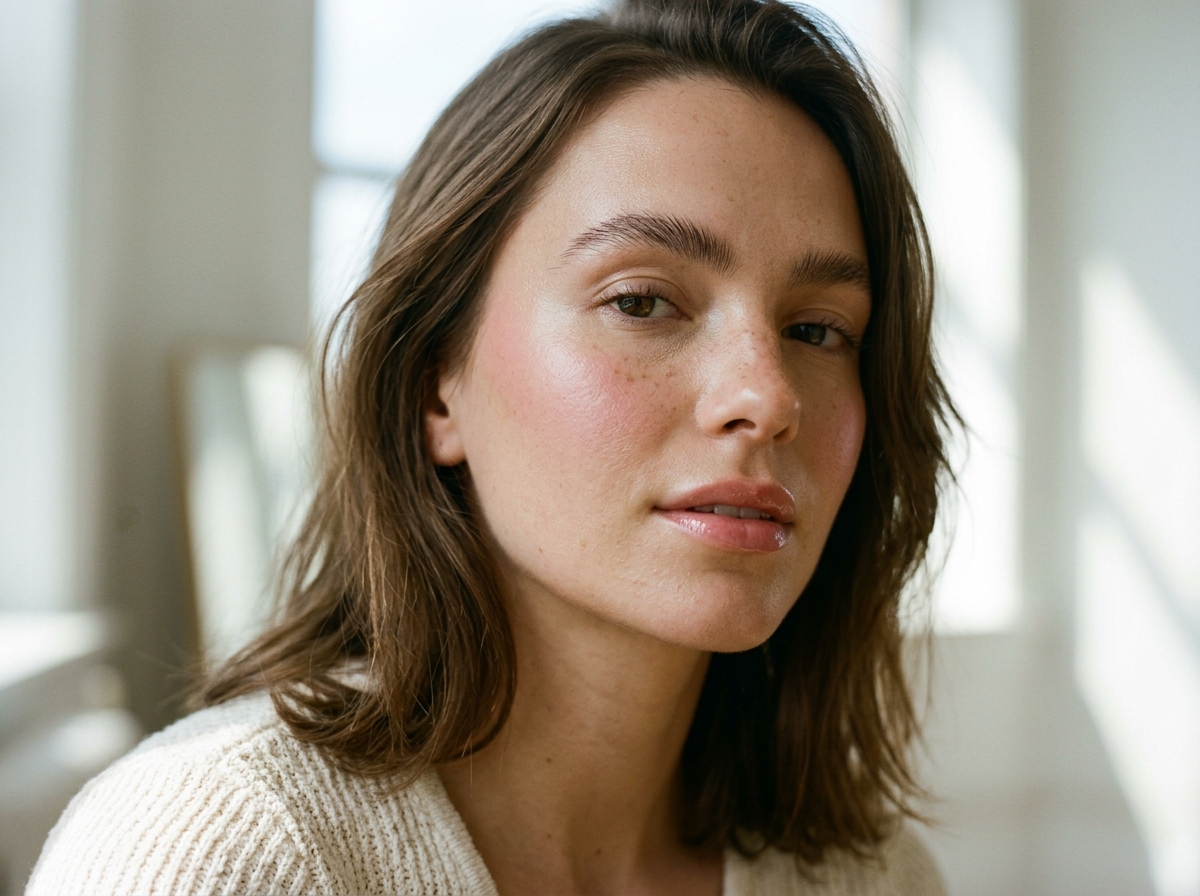
- For 20s & 30s: Ditch under-eye baking completely. If you have oily or combination skin, dust an ultra-fine translucent powder strictly down the center of your forehead, the bridge of the nose, and the chin.
- For 40s & 50s+: Adopt "Micro-Targeted Setting". Leave the entire under-eye and cheek area untouched by dry powder; set under-eyes with a hydrating setting mist instead. If setting the T-zone, use a baked mineral powder applied with a small fluffy eyeshadow brush in rolling motions.
🎨 Interactive Style Diagnostic: Wondering which makeup texture and aesthetic truly elevates your individual features in 2026?
Stop guessing between dewy glass skin, soft blurred lips, or lifted eyes.
👉 Take the 2-Minute 2026 Makeup Aesthetic Test →
3. Dark, Heavy Matte Eyeshadow on the Mobile Lid
Why It Adds Age
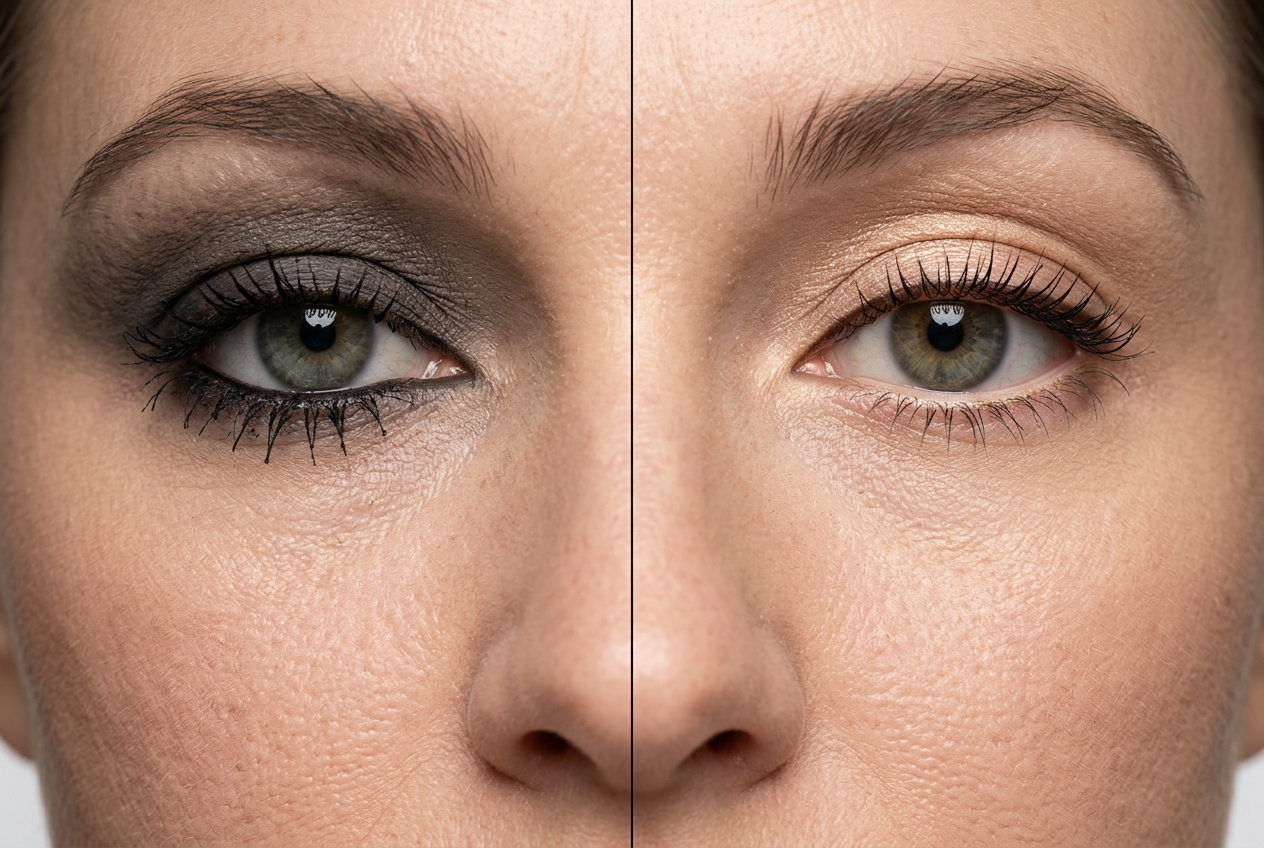
Deep smoky charcoals, dark espresso browns, and heavy cool taupes swept across the entire upper lid create deep optical recession:
- In Your 20s & 30s: Heavy dark eyeshadow can overpower delicate facial harmony, making the eyes appear tired, stern, and overly dramatic for daytime.
- In Your 40s & 50s+: With age-related dermatochalasis (skin laxity and hooded lids), dark matte pigments absorb incoming photons, making the eye socket look hollow, sunken, and exhausted while exaggerating palpebral skin crinkling.
How to Fix It by Age Group
- For 20s & 30s: Embrace the "Glossy Lid" or soft wash trend. A swipe of cream bronzer or liquid champagne shimmer across the lid adds dimension without dark heaviness.
- For 40s & 50s+: Apply luminous satin neutrals (champagne, soft rose-gold, warm ivory) across the inner two-thirds of the mobile lid to bounce light forward. If you have hooded lids, use the "Floating Crease" method: look straight ahead into a mirror and softly diffuse a warm caramel or soft taupe just above your natural crease onto the orbital bone.
4. Heavy Black Lower-Lash Liner & Clumping Bottom Mascara
Why It Adds Age
Encasing the lower waterline in dense black kohl or heavily coating bottom lashes is an optical gravity trap:
- In Your 20s & 30s: A harsh black lower line closes off the eye, making it appear substantially smaller and creating a harsh, fatigued aesthetic.
- In Your 40s & 50s+: It acts as a visual anchor that pulls the lateral canthus (outer eye corner) downward, casting dark shadows into the infraorbital hollow and magnifying under-eye puffiness and bags.
How to Fix It by Age Group
- For 20s & 30s: Keep the lower lash line completely bare, or softly smudge a warm bronze or peach eyeshadow along the outer third only for a soft, diffused feline lift.
- For 40s & 50s+: Master upper tightlining—press a waterproof dark brown gel pencil directly into the roots of your upper lashes to create invisible thickness. Keep the lower waterline clean, or line it with a flesh-toned/beige pencil to neutralize redness and brighten the sclera (white of the eye). Curl upper lashes thoroughly and skip lower mascara entirely.

5. Harsh, Geometric "Sharpie" Brows & Dark Pomades
Why It Adds Age
Over-drawing eyebrows into solid, angular, dark rectangular blocks is universally unflattering:
- In Your 20s & 30s: Ultra-laminated, thick, blocky "Instagram brows" look artificial, distracting from your natural bone structure and hardening soft facial contours.
- In Your 40s & 50s+: Natural brow hairs thin and gray with age. Drawing stark dark blocks creates a severe, angry, and strained expression that draws immediate attention to forehead lines and glabella furrows.
How to Fix It by Age Group
- For 20s & 30s: Emphasize natural fullness. Use a clear peptide brow gel to brush brow hairs upward and outward, then lightly flick a micro-fine pencil into sparse gaps to mimic real hair strokes.
- For 40s & 50s+: Step down 1 to 2 shades lighter than your natural hair color (soft taupe, cool blonde, or neutral gray-brown). Use a 0.05 mm pencil to draw hair-like strokes only where needed, leaving the inner corner light and diffused. Brush hairs upward to expose the clean brow bone for an instant brow-lift illusion.
6. Muddy Bronzer Contouring & Low "Smile-and-Apply" Blush
Why It Adds Age
- Muddy Cool-Brown Contouring: Drawing harsh brown hollows under the cheekbones mimics age-related buccal fat pad atrophy (Rohrich & Pessa, 2007), making younger faces look gaunt and mature faces look hollowed and fatigued.
- The "Smile-and-Apply" Trap: When you smile, cheek fat pads elevate. When your face relaxes into a neutral state, blush applied to the "apples" drops 0.5 to 1 inch (1.5–2.5 cm) lower—landing near the mouth and pulling the entire face downward.
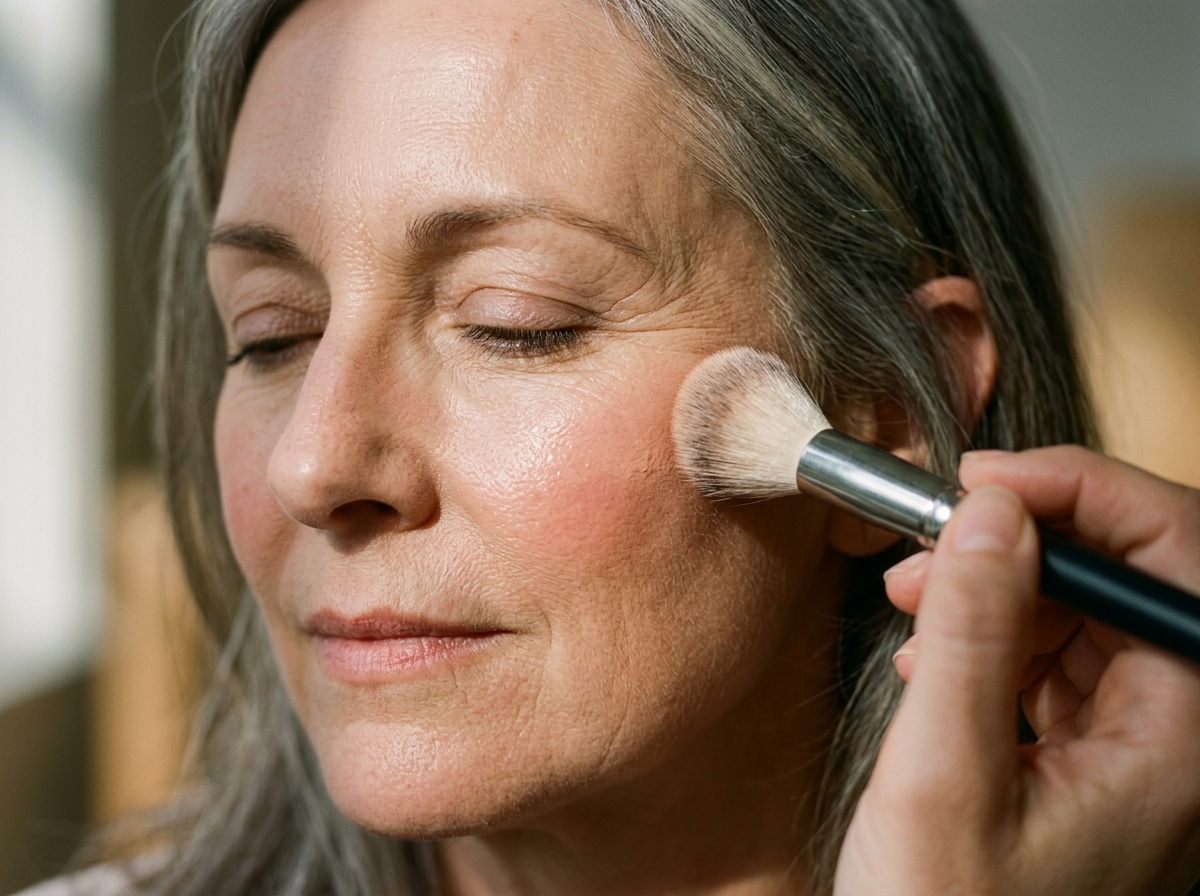
How to Fix It by Age Group
- For 20s & 30s: Replace hollow contouring with warm "brontouring" across the high points where the sun naturally hits (bridge of nose, temples, high cheekbone). Use a sheer dewy liquid blush for a luminous, flushed-from-within glow.
- For 40s & 50s+: Adopt the High-Malar Drape. Keep your face completely relaxed in a neutral expression. Apply a hydrating cream blush at the highest point of the zygomatic bone (starting under the pupil) and blend upward and outward toward the hairline/temples. Choose vibrant peach, coral-rose, or petal pink to restore youth-affirming microvascular warmth.
7. Full-Coverage Ultra-Matte Liquid Lipsticks
Why It Adds Age
Volatile liquid matte lipsticks rely on evaporating solvents (like isododecane) that shrink into a tight, rigid polymer film on the lips:
- In Your 20s & 30s: Matte formulas rapidly dehydrate the lip mucosa, emphasizing peeling and fine lines that make young lips look dry and lifeless. Over-lining with dark 90s brown lip liners further ages the mouth.
- In Your 40s & 50s+: As lips lose natural hyaluronic acid and subcutaneous volume, flat matte textures accentuate radial perioral lines (smoker's lines) and make lips look thin, parched, and severe.
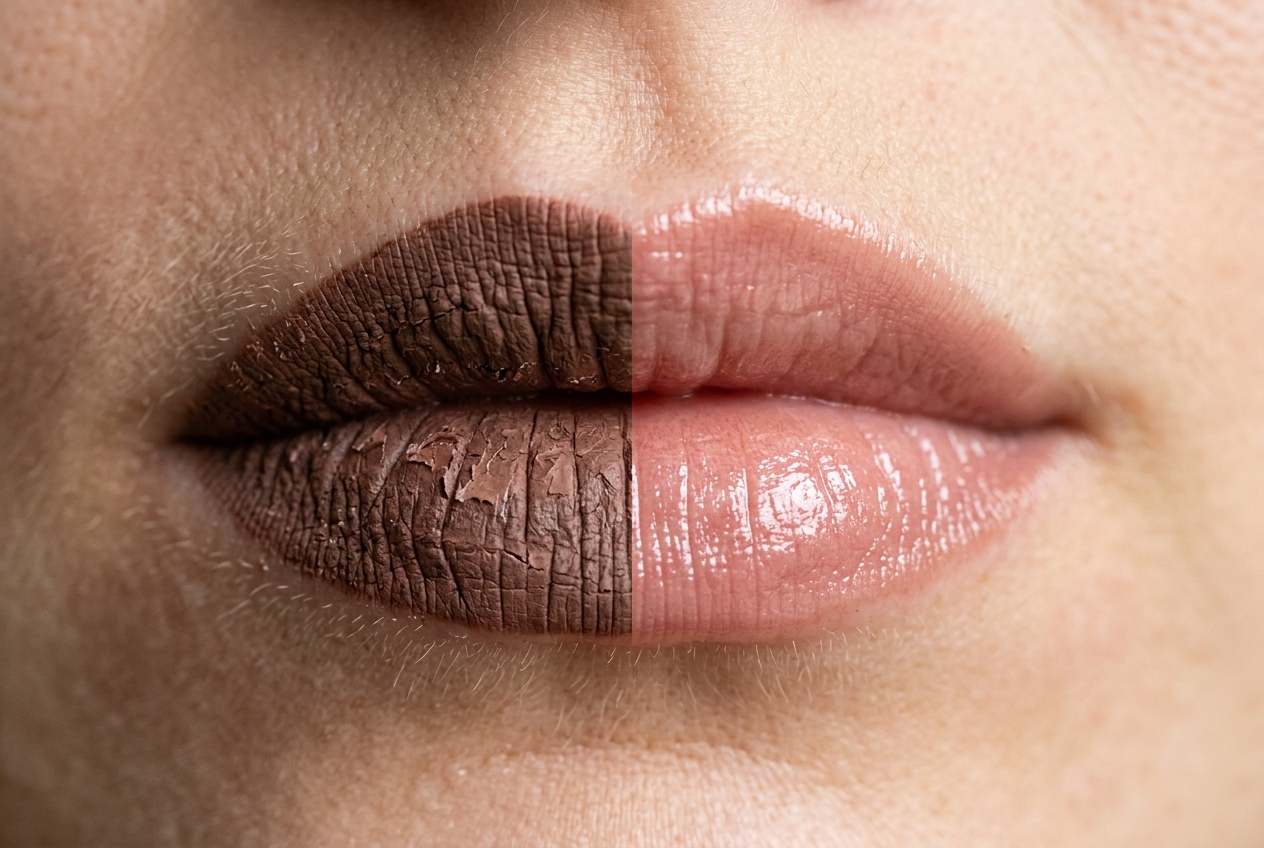
How to Fix It by Age Group
- For 20s & 30s: Embrace hydrating tinted lip oils, peptide cushion balms, or sheer glossy stains. A plump, glassy lower lip reflects light and reinforces natural collagen fullness.
- For 40s & 50s+: Treat lips overnight with an intensive restorative treatment like the cult-favorite LANEIGE Lip Sleeping Mask to dissolve dry flakes and plump radial perioral lines. Prior to makeup, line slightly outside the cupid's bow and the center of the lower lip with a creamy pencil in your natural lip shade, but stay inside the outer corners to prevent downturned mouth shadows. Finish with a nourishing satin lipstick or peptide-infused gloss.
Comprehensive Comparison: 20s–30s vs. 40s–50s+
| Area | In Your 20s–30s (Glow Preservation) | In Your 40s–50s+ (Structural Optical Lift) |
|---|---|---|
| Complexion | Sheer skin tint / BB cream + spot concealing | Hydrating serum foundation matching neck + squalane drop |
| Powder | Light translucent dust on T-zone only; NO baking | Zero powder under eyes; micro-targeted spherical silica on T-zone |
| Eyes | Sheer cream wash or luminous champagne glow | Satin champagne on mobile lid + "floating crease" above fold |
| Eyeliner | Soft brown flick on outer third; lower lash bare | Upper tightline only + 45° soft wing flick; flesh-toned waterline |
| Brows | Fluffy brushed-up hairs + clear peptide gel | Hair strokes 1–2 shades lighter than hair; lift arch with clear gel |
| Blush | Dewy liquid blush on high cheekbones and nose bridge | Cream peach-rose draped high along zygomatic arch to temples |
| Lips | Tinted lip oil or juicy glassy gloss | Nourishing satin lipstick + peptide gloss on center of lower lip |
The Essential Pre-Makeup Skincare Blueprint
Regardless of your age, makeup cannot perform on an uneven, dehydrated canvas.
- Hydrate on Damp Skin: After cleansing, mist with thermal water and apply 2–3 drops of multi-molecular hyaluronic acid or snail mucin essence (such as the cult-favorite COSRX Advanced Snail 96 Mucin Power Essence) to plump intercellular water reservoirs.
- Reinforce with Barrier Lipids: Lock in moisture with an oil-free ceramide moisturizer (such as dermatologist-favorite La Roche-Posay Toleriane Double Repair) or soothing panthenol balm. Allow 3 to 5 minutes to absorb before starting makeup to prevent pilling.
- Daily Sun Protection: Finish with an antioxidant broad-spectrum SPF 50 (such as clinical-grade CHRISTINA Line Repair Firm Daytime Guard SPF 50). In your 20s, it prevents photo-aging; in your 40s and 50s, its resveratrol-infused formula shields collagen elasticity while creating an ultra-silky, non-greasy optical primer under foundation.
💡 Pre-Foundation Skin Check:
- ⚗️ Foundation pilling or separating into clumps? Conflicting silicones, water-based actives, or incompatible serums often cause this. Identify the culprit with our Cosmetic Ingredient Compatibility Checker →.
- 🧴 Foundation sinking into dry patches or wearing off within an hour? Your skin barrier may be depleted. Assess it in our 60-Second Skin Type & Barrier Test →.
What to Read Next
Makeup creates powerful optical illusions—but it works best when built on genuinely healthy skin:
For Your 20s & 30s: Glow & Lipid Shield Recovery
Heavy baking, full-coverage foundation, or aggressive exfoliants can compromise the skin barrier—leaving it reactive and dehydrated. When the barrier is impaired, makeup sits patchy and cakes into fine lines.
👉 How to Repair Your Skin Barrier: The Complete 4-Week Protocol →For Your 40s, 50s & Beyond: Structural Density & Longevity
Optical lifting techniques deliver their full effect only when anchored by firm, collagen-dense skin supported by peptides and deep cellular hydration.
👉 The Complete Over-40 Skincare & Longevity Protocol →
👉 Calculate Your Biological Skin Age →
Scientific Citations & References
- Rohrich RJ, Pessa JE. (2007). The Fat Compartments of the Face: Anatomy and Clinical Implications for Cosmetic Surgery. Plastic and Reconstructive Surgery, 119(7): 2219–2227. PMID: 17519724
- Jacques SL. (2015). Incremental residual polarization caused by aging in human skin. Ageing Research Reviews, 23(Pt A): 108–117. PMID: 25680718
- Ganceviciene R, Liakou AI, Theodoridis A, Makrantonaki E, Zouboulis CC. (2012). Skin anti-aging strategies. Dermato-Endocrinology, 4(3): 308–319. PMID: 23467476