You're using the same products you've always loved — but now your skin burns, flakes, and reacts to everything. You add more moisturizer, but it's still tight an hour later. It's not the products. It's a broken skin barrier.
This is the #1 skin concern in 2026. Millions of people are searching for answers. Here they are.
What Is the Skin Barrier, Exactly?
Your skin barrier — known scientifically as the stratum corneum — is your skin's outermost layer. Think of it as a brick wall: skin cells are the bricks, and a mix of ceramides, fatty acids, and cholesterol is the mortar that holds it all together.
A healthy barrier does three things:
- Keeps moisture in — so your skin doesn't dry out
- Keeps irritants out — pollution, bacteria, allergens stay where they belong
- Maintains your skin's pH — around 4.5–5.5, slightly acidic
When that wall cracks, moisture escapes and irritants pour in. Everything goes wrong at once.

How to Know If Your Barrier Is Damaged
Go through this list honestly:
- Tightness even right after moisturizing
- Redness with no obvious trigger
- Stinging or burning from products that used to be fine
- Flaking that doesn't get better with more hydration
- Breakouts in places you don't normally get them
- Sudden sensitivity to cold, wind, or even touch
- Nothing absorbs properly — products just sit on top or pill off
Three or more? Your barrier needs repair now.
Important: If your skin is weeping, cracking, or causing real pain — see a dermatologist, not a beauty blog.
What Actually Damages Your Barrier?
Over-exfoliating is the #1 culprit in 2026. The "glass skin" obsession got people using AHAs and BHAs daily — sometimes both. Your barrier needs up to 28 days to fully recover. Stripping it every day doesn't give it a chance.
The wrong cleanser pH — bar soaps sit at pH 9–10. Your skin's natural pH is 4.5–5.5. Washing with an alkaline cleanser every day quietly destroys your acid mantle.
Other common causes:
- Harsh cleansers with sulfates
- Too much retinoid use without barrier support
- Fragrance and essential oils at high concentrations
- Dry air from AC or central heating
- Long hot showers
- Not enough fatty acids or zinc in your diet
The 5 Ingredients That Actually Work
Not every "barrier repair" label means anything. These are the ones with real evidence behind them:
1. Ceramides (NP, AP, EOP)
The most important ingredient, full stop. Ceramides make up about 50% of your skin's lipid layer. Without them, your barrier can't hold water. Look for a ceramide complex — multiple types together work better than one alone.
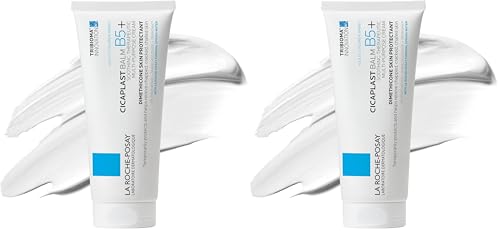
Worth trying: CeraVe Moisturizing Cream, Dr. Jart+ Cicapair Cream, La Roche-Posay Cicaplast Baume B5.
2. Cholesterol and Fatty Acids
Ceramides need cholesterol and fatty acids to function properly. The ideal ratio for barrier repair is 3:1:1 (ceramides : cholesterol : fatty acids) — which is exactly how healthy skin is built.
3. Niacinamide (2–5%)
Triggers your skin to make more ceramides on its own. Also calms redness, reduces inflammation, and tightens pores. At 2–5%, it's gentle enough for even the most irritated skin.
4. Panthenol (Vitamin B5)
Speeds up healing, draws moisture into the skin, and has solid anti-inflammatory effects. It's in virtually every serious barrier repair formula for good reason.
5. Beta-Glucan
Sourced from oats or mushrooms, beta-glucan is clinically proven to lower inflammation, support collagen production, and help ceramide synthesis. One of the most calming ingredients out there — great for reactive skin.
Tip: When you're repairing your barrier, less is more. Three products max: a gentle cleanser, a barrier cream, and SPF.
What to Stop Using While You Heal
Even if these are usually part of your routine — put them away for now:
| Stop Using | Why |
|---|---|
| AHAs (glycolic, lactic, mandelic acid) | Too acidic, disrupts pH, gets in the way of healing |
| BHAs (salicylic acid) | Strips the remaining lipids your skin needs |
| Physical scrubs | Physically damages cells that are already fragile |
| Retinol or retinoids | Ramps up cell turnover when skin needs to rest |
| Fragranced products | One of the top irritants for compromised skin |
| Alcohol-heavy formulas | Dissolves lipids on contact |
Most people notice real improvement within 2–4 weeks of keeping things gentle.
Your Repair Routine — Morning and Evening
This isn't a full skincare routine. It's a recovery protocol. Keep it simple.
Morning:
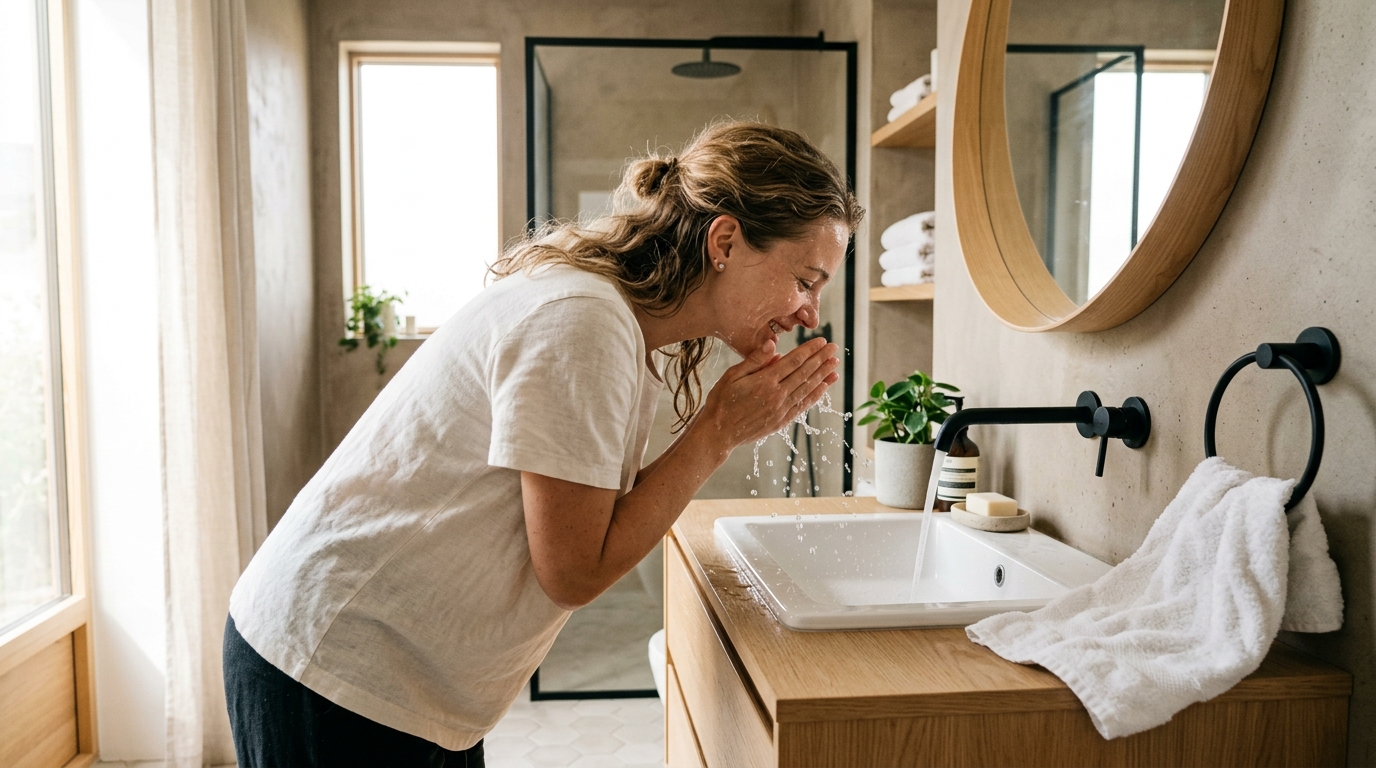
- Rinse with cool water only — no cleanser in the morning, it strips
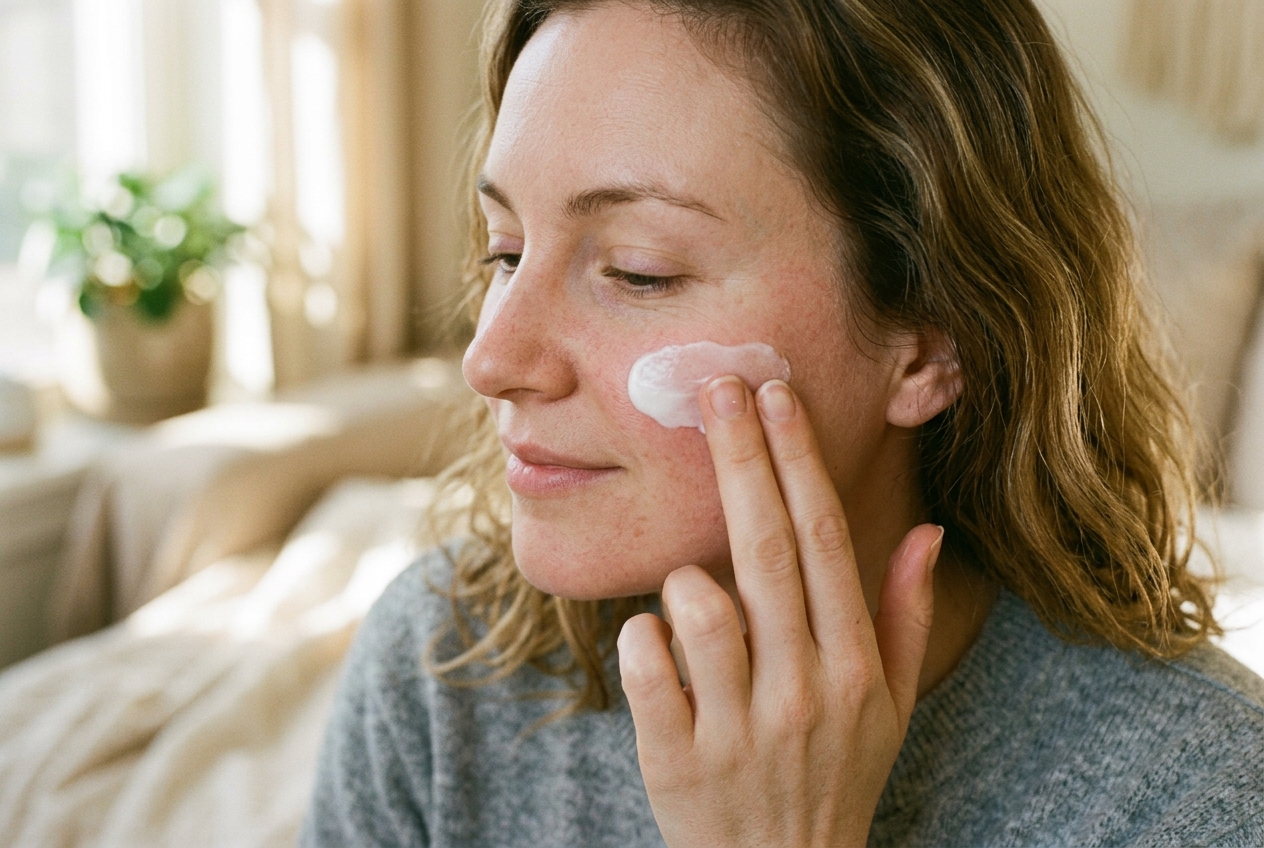
- Barrier cream with ceramides — on damp skin
- Mineral SPF 30–50 — zinc oxide or titanium dioxide only
Evening:
- Gentle cleanser — pH 4.5–6, no sulfates, no fragrance
- Barrier serum (optional) — niacinamide 2–5% or a panthenol serum
- Rich barrier cream — ceramide complex with cholesterol and fatty acids
Four weeks. Every day. No "just this once" exceptions.
Tip: Ditch the makeup wipes. They drag across already fragile skin and are full of solvents. Switch to micellar water or a cleansing balm.
Your Barrier and Your Microbiome Are Connected
They're not two separate things — they work as a system.
Your skin is home to trillions of microorganisms. When it's healthy, it's dominated by protective bacteria like Cutibacterium acnes and Staphylococcus epidermidis that actively guard against harmful pathogens.
When your barrier breaks down:
- Your skin pH rises and becomes less acidic
- S. aureus (a harmful bacterium) moves in
- Inflammation spikes
- The barrier breaks down further — and the cycle repeats
What helps your microbiome:
- Prebiotic ingredients (inulin, fructooligosaccharides)
- Postbiotics (Lactobacillus ferment filtrate, bifida ferment lysate)
- Staying away from antibacterial soaps on your face

How Long Does It Take?
| How Bad Is It? | When to Expect Improvement |
|---|---|
| Mild — slight tightness, occasional flaking | 1–2 weeks |
| Moderate — regular redness, stinging, breakouts | 3–6 weeks |
| Severe — constant discomfort, extreme sensitivity | 3–6 months + a dermatologist |
Healing isn't a straight line. Week two often feels worse than week one — that's normal. Watch for small signs: Does water sting less? Does your moisturizer absorb better? Is your skin softer two hours after applying cream? Every yes means you're getting there.
The Bottom Line
Your skin barrier is your first line of defense. No skincare routine — no matter how expensive — works properly on a broken barrier.
The fix isn't complicated: stop stripping, start replenishing. Ceramides, fatty acids, cholesterol, panthenol, niacinamide. A gentle cleanser. SPF. Patience.
Keep it up for four weeks and you'll genuinely see the difference.

Start today. Your skin already knows how to heal — it just needs you to get out of the way.