Can You Use Copper Peptides (GHK-Cu) and Sunscreen (SPF 30–50+) Together? Compatibility & Layering
Compatible & Safe to Layer — «Copper Peptides (GHK-Cu)» and «Sunscreen (SPF 30-50+ / UV Filters)» have no known negative chemical interactions and can be safely layered together.
Copper Peptides (GHK-Cu)
Elite signal peptides accelerating tissue remodeling, skin regeneration, wound healing, and collagen production.
Sunscreen (SPF 30-50+ / UV Filters)
The non-negotiable final step of AM skincare. Shields against UVA/UVB rays and prevents premature aging.
💡Dermatologist Protocol (How to Combine):
Layer by texture consistency: apply thin, water-based serums first, followed by heavier creams and oils.
⏱️Which Goes First? (Layering Sequence):
Copper Peptides (GHK-Cu) and Sunscreen (SPF 30–50+) pair seamlessly in the same routine. Following the dermatological thinnest-to-thickest rule: apply "Copper Peptides (GHK-Cu)" as Step 1, allow 1–2 minutes to absorb, and follow with "Sunscreen (SPF 30–50+)" as Step 2.
⚗️pH Acidity Spectrum: Copper Peptides (GHK-Cu) vs. Sunscreen (SPF 30–50+)
Healthy skin barrier maintains a natural acid mantle between pH 4.7 and 5.5. Large pH discrepancies between layered products can destabilize actives or trigger stinging.
Test Other Combinations or Build Your Full AM/PM Routine
Compatible & Safe to Layer
🔬 Chemical Mechanism & Skin Impact:
«Copper Peptides (GHK-Cu)» and «Sunscreen (SPF 30-50+ / UV Filters)» have no known negative chemical interactions and can be safely layered together.
💡 Dermatologist Layering Advice:
Layer by texture consistency: apply thin, water-based serums first, followed by heavier creams and oils.
Frequently Asked Questions: Copper Peptides (GHK-Cu) & Sunscreen (SPF 30–50+)
Can you use Copper Peptides (GHK-Cu) and Sunscreen (SPF 30–50+) together in the same routine?
Compatible & Safe to Layer. «Copper Peptides (GHK-Cu)» and «Sunscreen (SPF 30-50+ / UV Filters)» have no known negative chemical interactions and can be safely layered together. Layer by texture consistency: apply thin, water-based serums first, followed by heavier creams and oils.
Which goes first: Copper Peptides (GHK-Cu) or Sunscreen (SPF 30–50+)?
Copper Peptides (GHK-Cu) and Sunscreen (SPF 30–50+) pair seamlessly in the same routine. Following the dermatological thinnest-to-thickest rule: apply "Copper Peptides (GHK-Cu)" as Step 1, allow 1–2 minutes to absorb, and follow with "Sunscreen (SPF 30–50+)" as Step 2.
What is the optimal pH level of Copper Peptides (GHK-Cu) vs. Sunscreen (SPF 30–50+)?
Copper Peptides (GHK-Cu) operates optimally at a pH of 6.0 - 7.5, whereas Sunscreen (SPF 30–50+) functions at a pH of 6.0 - 7.5. When combining formulas with different pH windows, always apply the lower-pH watery serum first or split them between your morning and evening routines.
Is layering Copper Peptides (GHK-Cu) with Sunscreen (SPF 30–50+) safe for sensitive skin?
Yes, pairing Copper Peptides (GHK-Cu) with Sunscreen (SPF 30–50+) is well-tolerated by sensitive skin types and supports healthy barrier function when sealed with moisturizer.
Compatibility with Other Skincare Actives
Other Pairings for Copper Peptides (GHK-Cu):
Other Pairings for Sunscreen (SPF 30–50+):
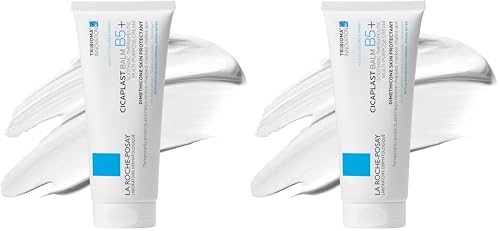
La Roche-Posay Cicaplast Baume B5+ Soothing Repairing Balm (5% Panthenol)
Madecassoside + Tribioma • Ideal for Retinol Sandwiching & Post-Acid Recovery
When layering potent actives like retinoids, exfoliating AHA/BHA acids, or pure Vitamin C, the primary risk is lipid barrier disruption. Cicaplast Baume B5+ with 5% Panthenol and Madecassoside rapidly calms erythema, restores the microbiome, and acts as the ultimate protective buffer.