Important: This article is for informational purposes only and does not replace professional medical advice. Always consult a healthcare specialist before making significant changes to your diet or starting new supplements.
Over the past few years, the philosophy of skincare has undergone a quiet revolution. We no longer believe that aging can be entirely halted with topical creams alone. Instead, scientific focus has shifted toward metabolic processes and nutrition. And one of the most destructive, yet overlooked, enemies of youthful skin is ordinary sugar.
The biochemical process through which sugar damages the skin matrix is called glycation (sometimes referred to as saccharification). It physically transforms soft, elastic skin proteins into stiff, cross-linked structures, accelerating the appearance of deep wrinkles, sagging, and a dull, yellowed complexion.
1. What Is Skin Glycation and "Zombie" Molecules (AGEs)?
From a biochemical perspective, glycation is a non-enzymatic reaction between reducing sugars (such as glucose and fructose) and the free amino groups of proteins, lipids, or nucleic acids. In the human body, this reaction proceeds slowly but steadily over time through a series of complex rearrangements known as the Maillard reaction.
The final endpoint of this cascade is the accumulation of Advanced Glycation End-products (AGEs).

In our skin, the most long-lived structural proteins are collagen and elastin. Due to their slow turnover rate, they are highly vulnerable to sugar molecules. As detailed in the comprehensive review in PMC9131003, the accumulation of AGEs in the skin causes covalent cross-links to form between adjacent collagen fibrils.
This leads to several critical outcomes:
- Loss of Elasticity: The dermal matrix loses its ability to stretch and recoil, becoming stiff and fragile.
- Impaired Regeneration: The body's natural enzymes (like matrix metalloproteinases) struggle to break down and clear away this rigid, cross-linked collagen to replace it with fresh, healthy fibers.
- Cellular Damage: AGEs bind to specific receptors on cell surfaces (known as RAGE), triggering a cascade of chronic micro-inflammation (inflammaging) and oxidative stress.
2. The "Sugar Face" Syndrome: What It Looks Like
The term "sugar face" is popular in holistic skincare, but it describes very real dermatological symptoms. The rate of AGE accumulation increases significantly after the age of 30-35, and its excess manifests in the skin through distinct signs:
- A Network of Fine and Deep Wrinkles. This is especially prominent in highly mobile areas of the face, such as around the eyes ("crow's feet") and around the mouth.
- Sagging and Loss of Firmness (Gravitational Ptosis). The contours of the face begin to droop prematurely because the structural support matrix of the skin has lost its integrity.
- A Yellowish-Brown, Dull Complexion. This is the physical manifestation of the Maillard reaction—the same caramelization process that produces the brown crust on baked bread or roasted meat.
- Increased Inflammation and Breakouts. A high-sugar diet spikes insulin and sebum production, altering the sebum composition and fueling low-grade chronic inflammation, which exacerbates acne.

3. Anti-AGE Nutrition: Minimizing Sugar Damage From Within
While it is impossible to stop glycation entirely—as it is a natural part of human aging—we can significantly slow down its pace through targeted nutritional habits.
According to a study published in PMC9655929, reducing the intake of simple sugars and choosing low-temperature cooking methods are highly effective strategies for lowering the concentration of AGEs in tissues.
Key Dietary Rules for Anti-Glycation:
- Manage Your Glycemic Index: Minimize your consumption of refined sugars, sweets, sugary sodas, white flour, and processed foods. Prioritize complex, fiber-rich carbohydrates.
- Limit Dietary AGEs: Approximately 10% of the products of glycation present in cooked foods are absorbed by the body. AGEs are highest in foods prepared using dry heat at high temperatures, such as deep-frying, grilling, and roasting (especially fatty meats).
- Opt for Gentle Cooking Methods: Steam, stew, or boil your meals. Marinating meat in an acidic medium (like lemon juice or vinegar) before cooking reduces the formation of new AGEs by more than half.
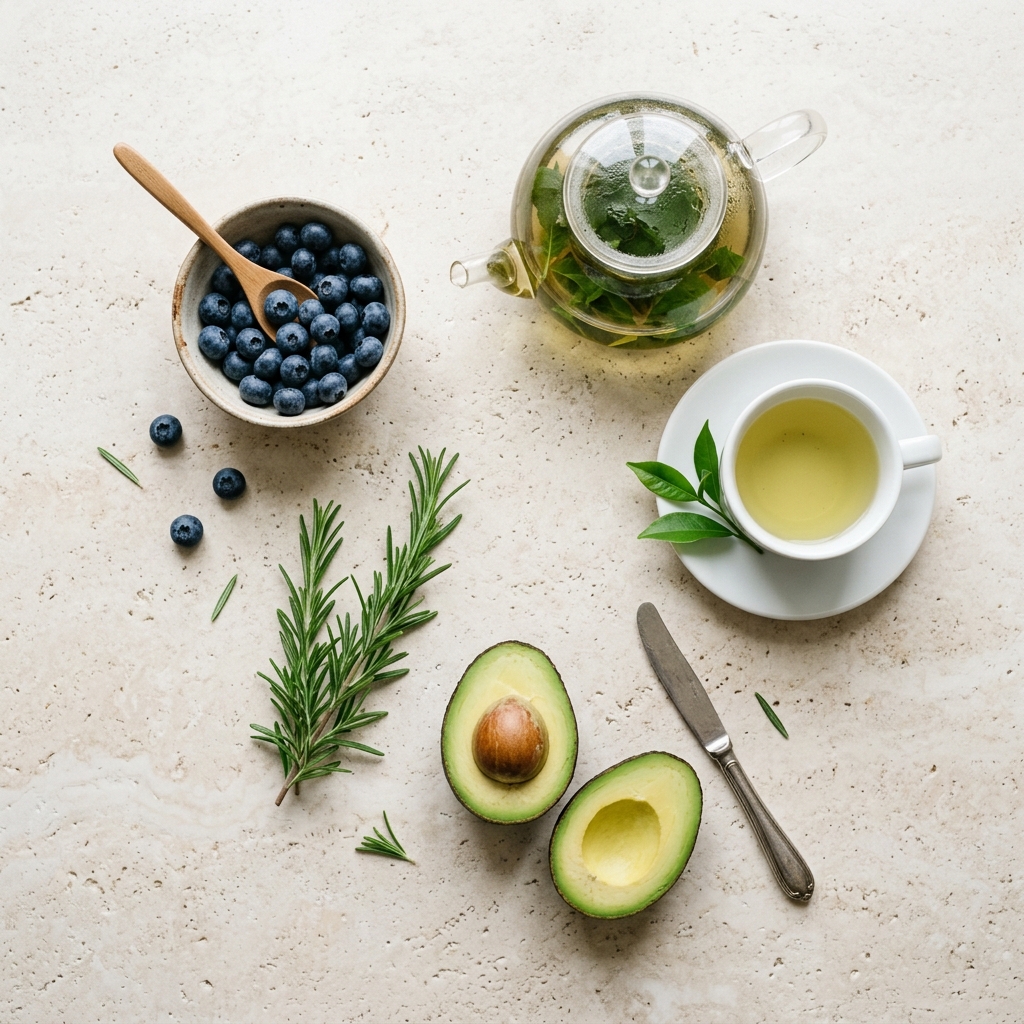
- Incorporate Anti-Glycation Antioxidants: Add foods rich in natural anti-glycation compounds to your daily diet. Green tea (rich in EGCG), blueberries, rosemary, avocados, and turmeric help block the chemical reactions that bond sugars to collagen.
📊 Manage Your Carbohydrates and Nutrition
To prevent glycation, it is essential to monitor your macronutrient balance. Calculate your individual daily targets for proteins, fats, carbohydrates, and a safe calorie deficit!
4. Topical Solutions: An External Shield for Collagen
Complementing your dietary defense with target-focused topical skincare is highly beneficial. Modern research in gerontocosmetology, such as the clinical review in PMC12024170, proves that topical antioxidants and specific anti-glycation actives can protect the dermal matrix.
Look for the following active ingredients in your serums and moisturizers:
- Carnosine: A peptide that acts as a "decoy" molecule. It attracts and binds to sugars, taking the hit to spare your skin's collagen from glycation.
- Niacinamide (Vitamin B3): Helps reverse the yellowing/earthiness of glycated skin, strengthens the lipid barrier, and fights signs of photoaging.
- Vitamin C (Ascorbic Acid): A powerful antioxidant that stimulates the synthesis of new, healthy collagen to rebuild the matrix damaged by saccharification.
- Green Tea, Blueberry, and Pomegranate Extracts: Plant-derived polyphenols that interrupt the pathways of inflammation and oxidative stress triggered by AGE accumulation.
Conclusion
Healthy, youthful skin is a reflection of overall metabolic health. Sugar initiates glycation in the dermis, rendering collagen rigid and brittle, which leads to premature wrinkling and a dull tone.
To protect your skin, adopt a double-sided approach:
- From the Inside: Monitor your macronutrient balance, limit simple sugars, and choose gentle cooking methods.
- From the Outside: Protect your skin with broad-spectrum SPF daily, and use targeted skincare containing carnosine, antioxidants, and niacinamide.
Consistent lifestyle adjustments and dietary moderation will help keep your skin matrix supple, firm, and radiant for years to come.
Scientific Citations
- PMC9131003 — Advanced Glycation End Products in the Skin: Molecular Mechanisms, Methods of Measurement, and Inhibitory Pathways (2022)
- PMC9655929 — Research Advances on the Damage Mechanism of Skin Glycation and Related Inhibitors (2022)
- PMC12024170 — Synthetic and Natural Agents Targeting Advanced Glycation End-Products for Skin Anti-Aging (2025)