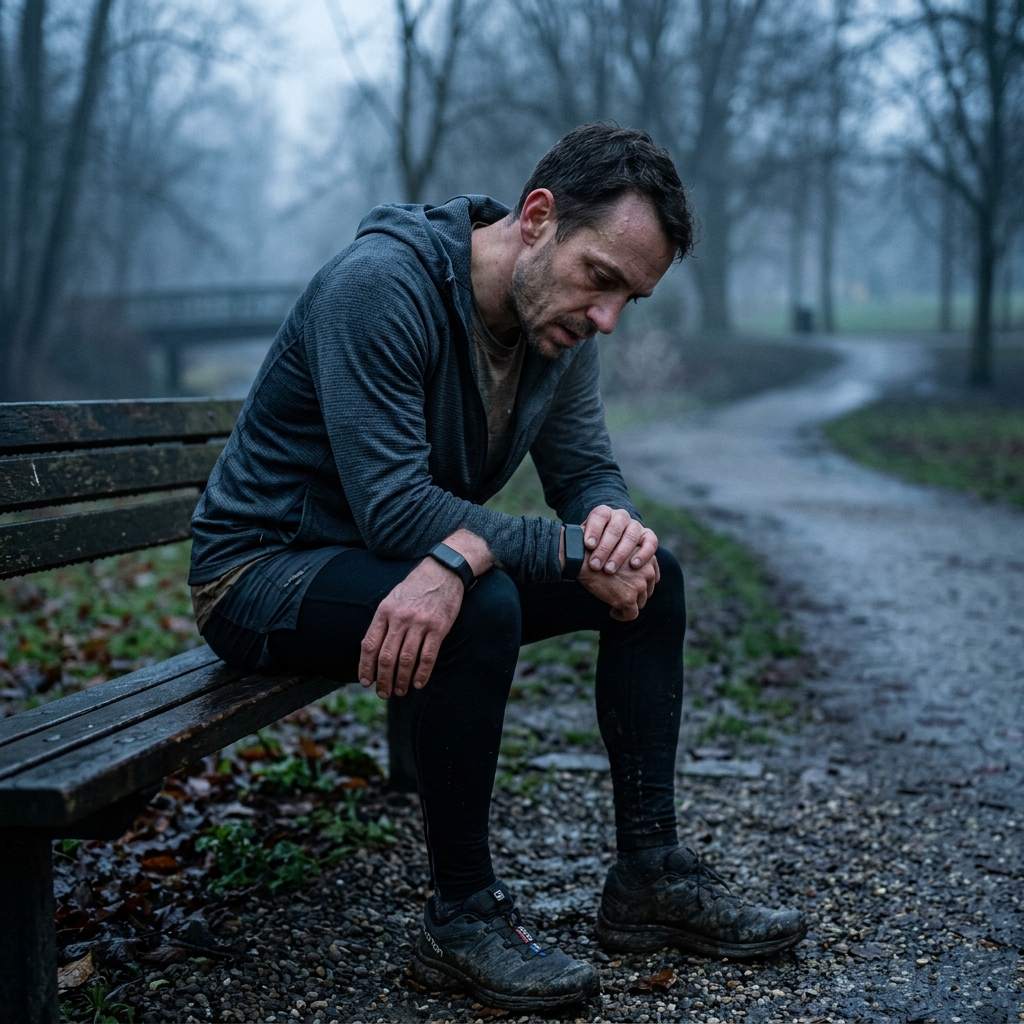

When body care becomes an obsession, the body triggers self-defense mechanisms that often resemble an illness. A healthy lifestyle is not just about workouts and vitamins, but above all, a sense of proportion.
I. 5 Physical Consequences: When the Body Malfunctions
1. Oxalate Overload and Kidney Collapse
The mass fascination with "green detoxes" (concentrated smoothies of spinach, celery, parsley) has created a new wave of patients for urologists.
Mechanism: These plants have an excess of oxalic acid. In a salad, it is almost harmless, but as a liquid concentrate on an empty stomach, oxalates instantly crystallize in the kidneys.
Important: Kidney stone disease and the risk of acute renal failure often occur in people who "just wanted to detox" without medical consultation.
2. Hormonal Burnout (RED-S Syndrome)
This is a widespread problem among intense CrossFit and "cutting" enthusiasts. When a calorie deficit meets extreme loads, the brain shuts down "unnecessary" functions.
Manifestations:
- Women lose their menstrual cycle.
- Men experience a critical drop in testosterone.
- Persistent cravings for sweets appear.
Fact: The hypothalamus arrives at the conclusion that times of famine and war have come, putting the body into a strict energy-saving mode.
3. Drug-Induced Hepatitis from Supplements
Biohackers taking 30–50 capsules a day underestimate the effect of the "cocktail." The liver is not designed to process dozens of synthetic compounds simultaneously.
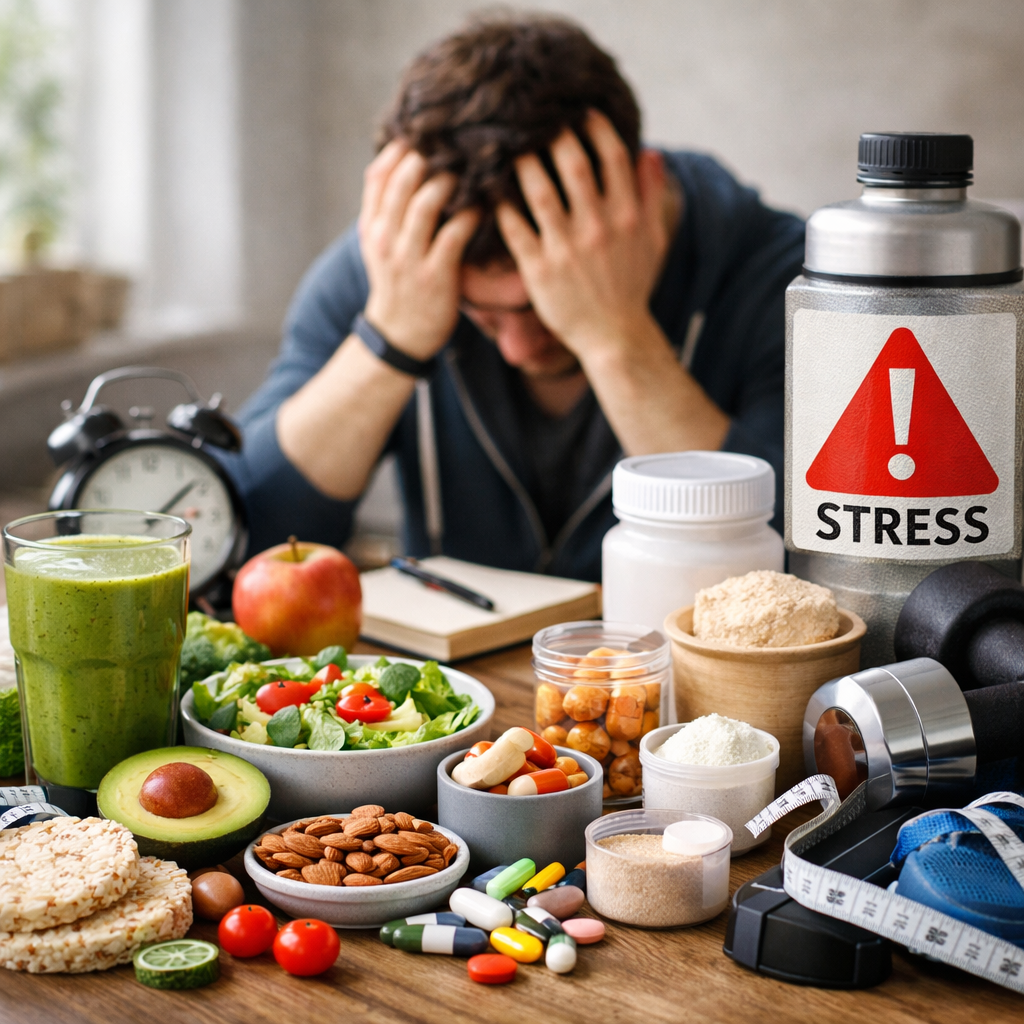
Mechanism: Even substances that are beneficial individually can become toxic in combination. For example, an excess of green tea extract or vitamin A often leads to reactive inflammation.
Tip: Always take breaks in supplement intake and check medication compatibility with a specialist.
4. Cardiac Fibrosis in "Amateur Marathoners"
Sports are good for the heart, but extreme overloads (ultramarathons without years of preparation) change its structure.
Mechanism: Constant work at a heart rate of 170+ bpm causes micro-tears in the heart muscle that heal as scars (fibrosis).
Risk: This significantly increases the likelihood of arrhythmia and sudden cardiac arrest at the age of 40–50.
5. Microbiome Disruption Due to "Sterile" Diets
Excluding entire food groups (sugar, gluten, lectins) leads to the extinction of beneficial bacteria in the gut.
Result: IBS (Irritable Bowel Syndrome), allergies to "everything," and a drop in immunity.
Remember: Microflora needs diversity. When the diet narrows down to chicken breast and cucumber, helper bacteria die of starvation.
II. 5 Psychological Consequences: When the Brain is Trapped
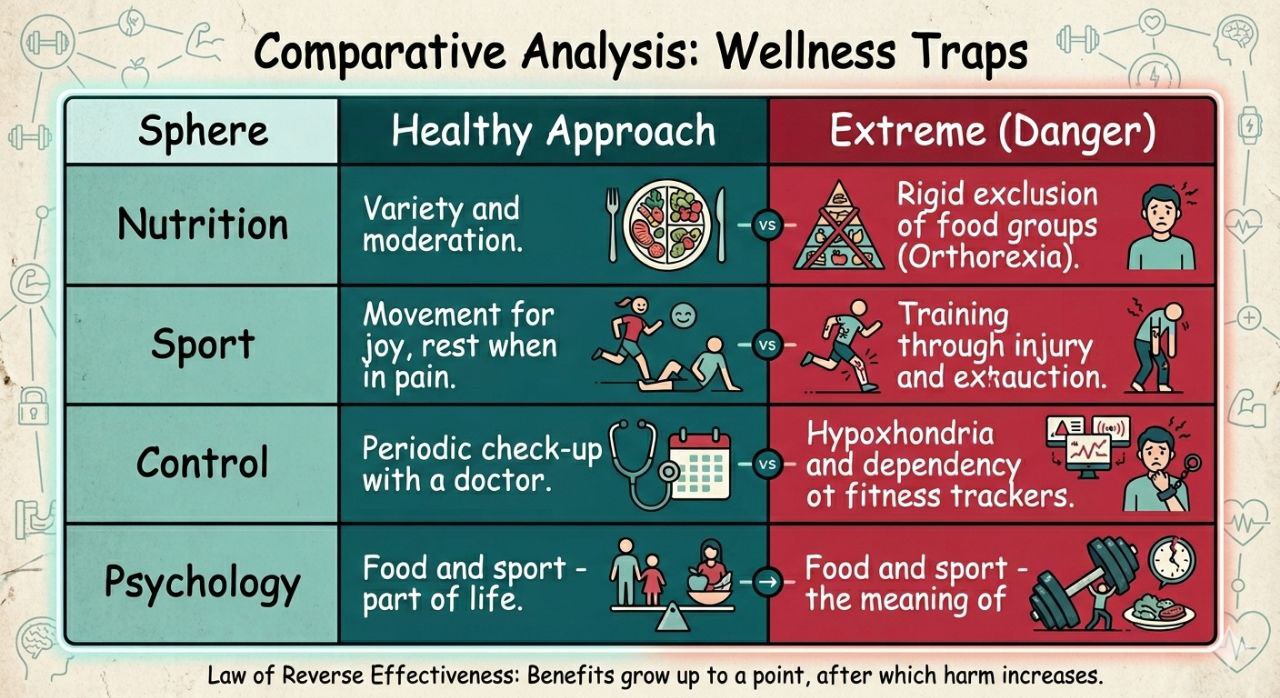
1. Orthorexia: The Dietary Inquisition
This is not just a desire to eat healthily; it is a panic fear of "dirty" food. A person spends 3–4 hours a day thinking about the menu.
Symptom: A sense of deep "sin" and shame after consuming a non-organic product.
2. Dysmorphophobia (Muscle Dysmorphia)
A person in excellent shape looks in the mirror and sees themselves as "flabby" or "small." This is a vicious cycle leading to depression.
How it manifests:
- Constant comparison with "photoshopped" athletes.
- Need to spend 3 hours in the gym 6-7 times a week.
3. Gadget Addiction and Disconnection from the Body
The modern wellness addict does not trust their well-being; they trust only a smart ring or a fitness bracelet.
Mechanism: Anxiety grows if the tracker shows "poor sleep," even if the person woke up feeling refreshed. A workout "doesn't count" unless recorded by a device.
Important: This leads to a loss of the ability to hear real body signals: hunger, thirst, and genuine fatigue.
4. Social Isolation of a Wellness Addict
A healthy lifestyle becomes the only topic of conversation and the main criterion for judging others.
Consequence: Breakdown of families and loss of friends due to the aggressive imposition of views.
5. The Cortisol Trap of Control
The constant striving for perfection is a powerful chronic stress. The paradox is that high inflammation levels due to nervous tension cancel out all benefits from jogging.
The Bottom Line
"A healthy lifestyle is an excellent servant, but a terrible master."
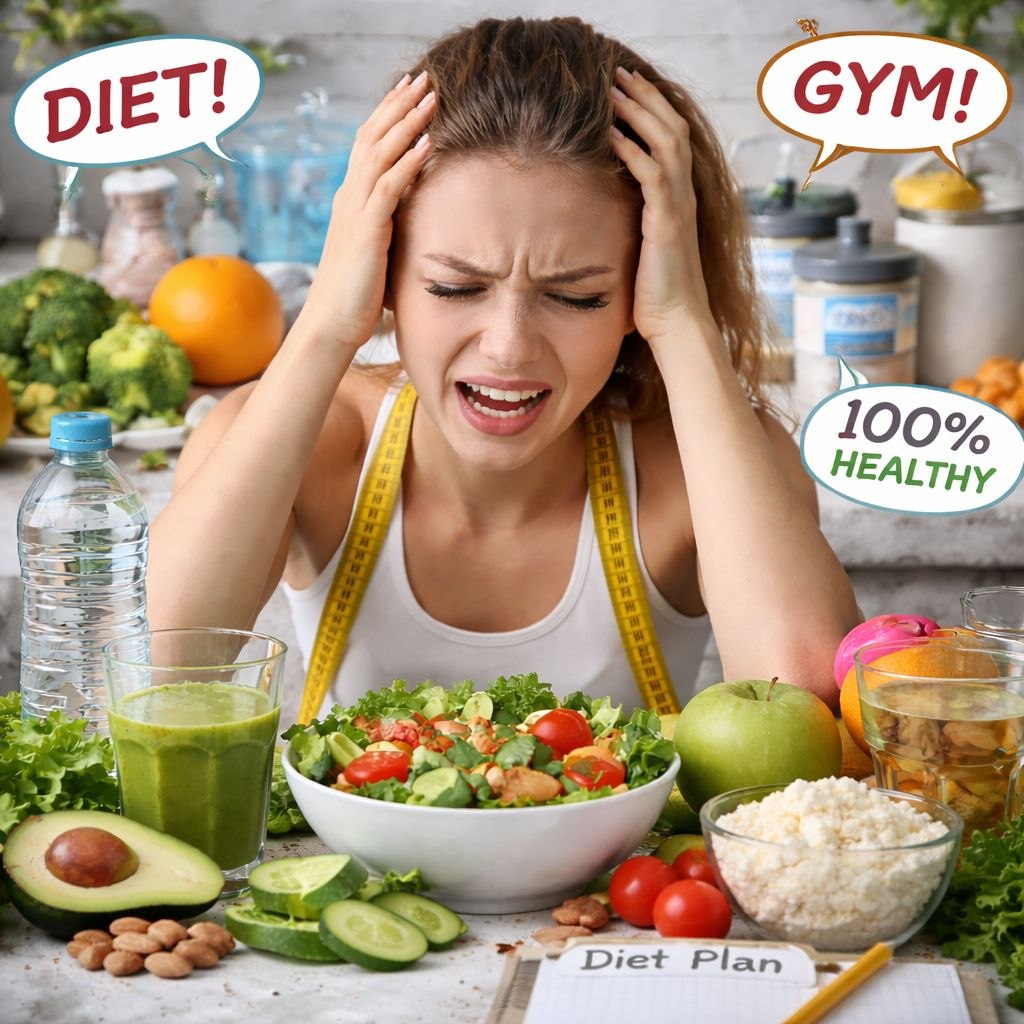
As soon as you catch yourself thinking that "skipping a workout = disaster," know this: you are no longer healing, you are harming yourself. Seek balance, listen to your body, and allow yourself to be imperfect sometimes.