Important: This article is for informational purposes only and summarizes recent clinical research in dermatology. Always consult a board-certified dermatologist before introducing active ingredients or supplements into your routine.
Our body has an integrated self-cleaning and repair system. In 2016, Japanese biologist Yoshinori Ohsumi was awarded the Nobel Prize for discovering the mechanisms of autophagy — the process by which cells break down and recycle their own damaged components. Today, this science is transforming modern anti-aging dermatology.
One of the most promising active ingredients capable of stimulating autophagy topically is a natural disaccharide called Trehalose. In this article, we will explore how autophagy works in the skin, why it declines as we age, and how trehalose helps restore cellular health and energy.
1. What is Autophagy and Why is it Critical for Skin?
Derived from Greek, "autophagy" translates to "self-eating." However, rather than cellular destruction, it represents an intelligent internal recycling system.
Over time, metabolic stress causes damaged proteins, inactive enzymes, and worn-out mitochondria (the cells' energy factories) to accumulate inside skin cells (keratinocytes and fibroblasts). When a cell fails to clear this debris, it becomes senescent, releasing inflammatory signals that break down surrounding extracellular matrix.
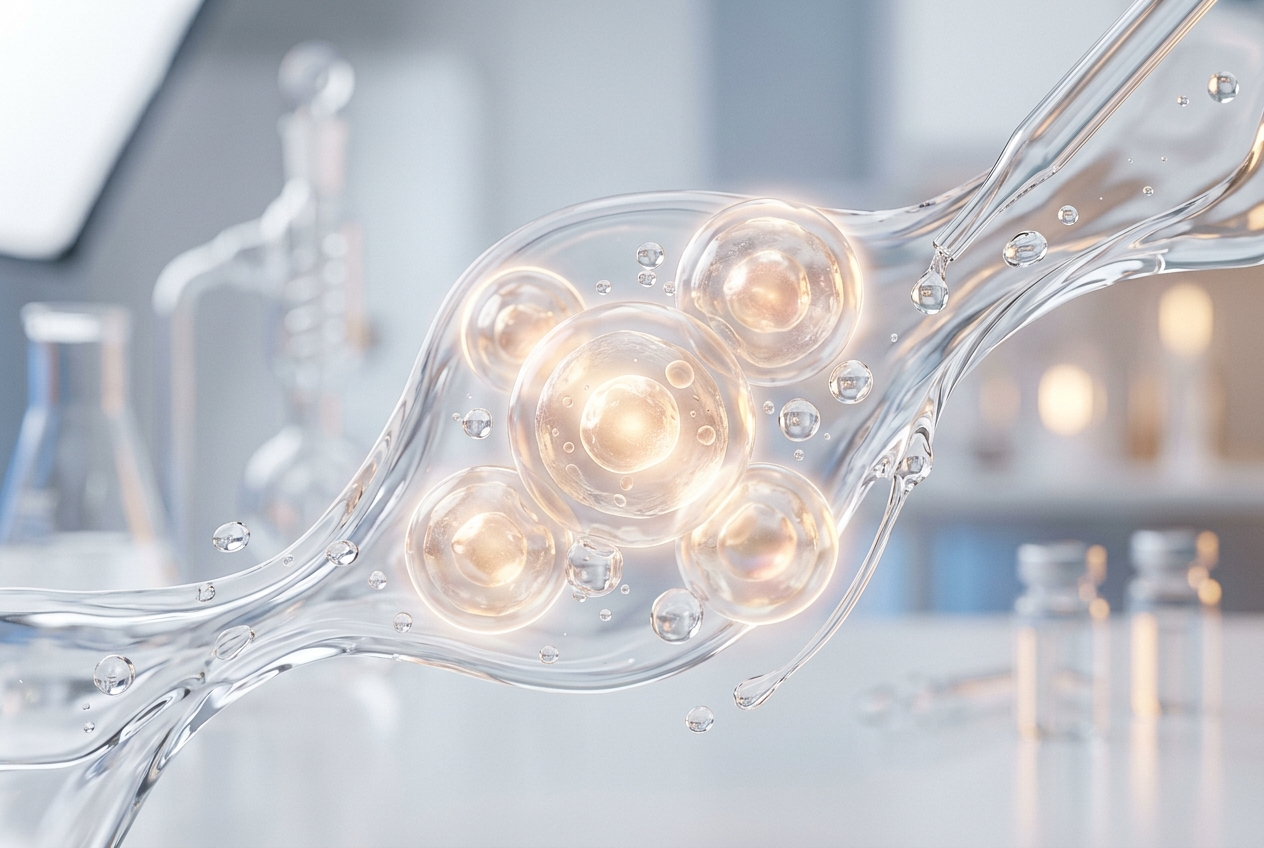
According to a comprehensive review in PMC6651276, the age-related decline of autophagic activity is a primary driver of skin aging. A slowdown in autophagy leads to:
- Reduced Collagen Synthesis: Fibroblasts burdened with cellular debris lose their capacity to produce new collagen and elastin fibers.
- Oxidative Stress: Defective mitochondria produce excessive reactive oxygen species (free radicals), causing lipid damage and skin barrier dysfunction.
- Hyperpigmentation: The recycling of melanin pigment in outer skin cells (keratinocytes) is disrupted, promoting stubborn age spots and uneven skin tone.
2. Trehalose: The "Resurrection" Disaccharide
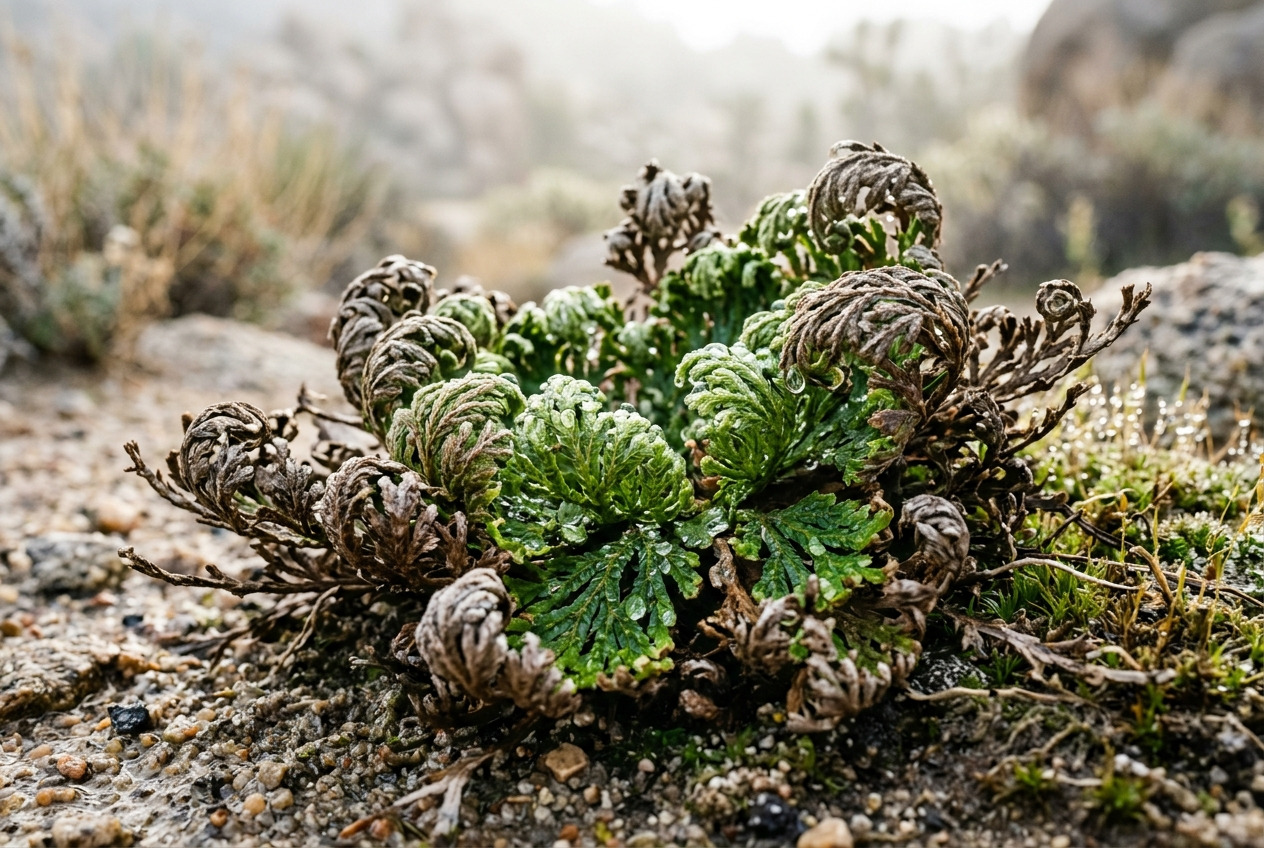
Trehalose is a natural carbohydrate found in certain desert plants, fungi, and micro-organisms. It is commonly referred to as the "resurrection sugar." The most prominent example of its action is the desert resurrection plant (Selaginella lepidophylla). Under extreme drought, it dries out completely, turning into a brown, withered ball. Yet, with a single drop of water, it unfolds and turns green within hours.
This survival mechanism is mediated by trehalose. It replaces water molecules in cellular membranes, wrapping proteins in a protective matrix to preserve their structural integrity.
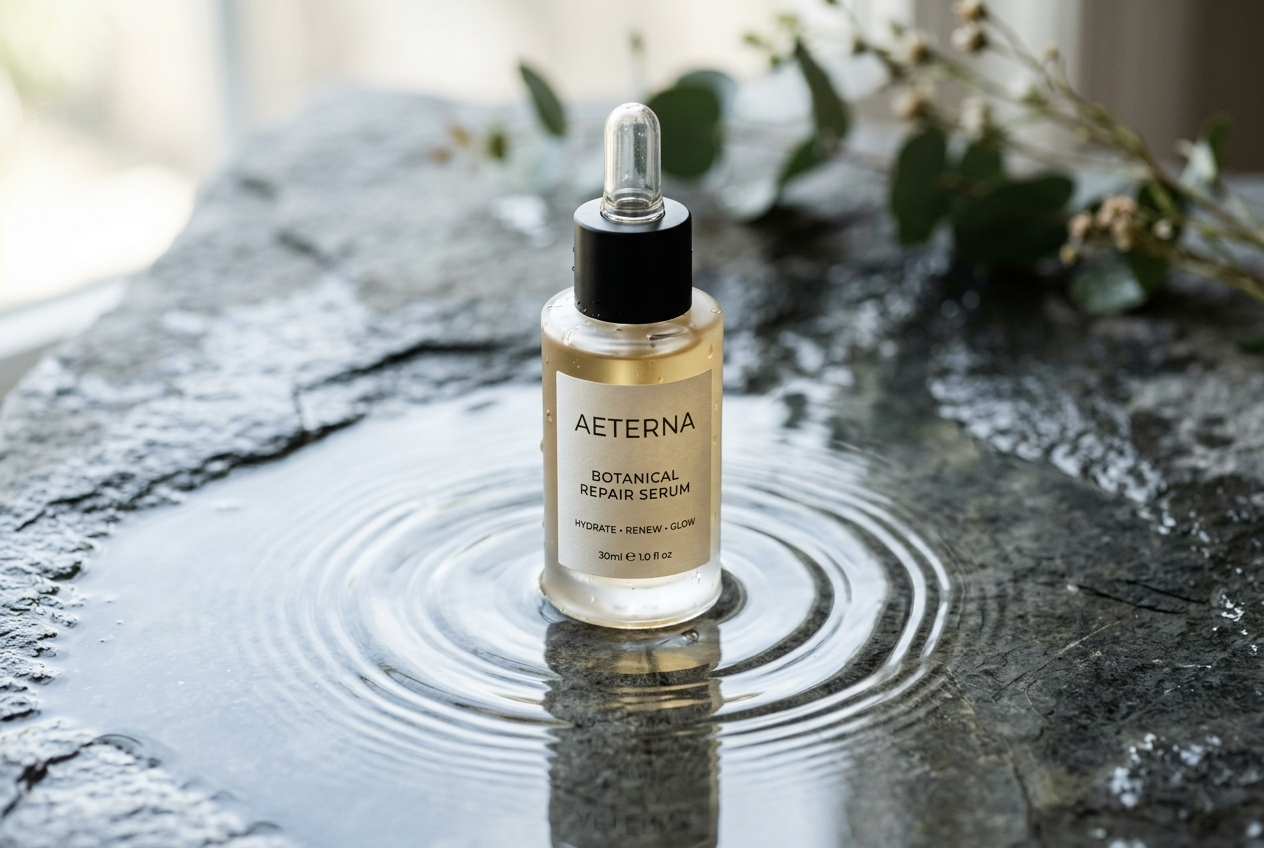
In cosmetic formulations, trehalose is typically used in concentrations of 1% to 3% in moisturizing serums of 1 fl oz (30 ml) or face creams of 1.7 oz (50 ml). It acts as an osmoprotectant, shielding cells from dehydration, thermal shock, and environmental stressors.
3. The Molecular Link: How Trehalose Activates Autophagy
While trehalose was historically utilized as a humectant, recent dermatological studies have proven that it acts as a potent autophagy inducer that works independently of the mTOR pathway (the main protein network that controls cell growth).
Unlike classical autophagy activators (such as extreme caloric restriction), trehalose triggers the cellular cleanup process without interfering with the vital mTOR protein pathway. This makes it highly safe for regular topical application.

In a study published in PMC9018197, researchers demonstrated that trehalose protects human skin cells against ultraviolet B (UVB) radiation damage via autophagy:
- TIMP3 Activation: Trehalose stimulates the expression of TIMP3 (a protective protein that inhibits matrix-degrading enzymes).
- ATG9A Upregulation: It increases the expression of ATG9A, a transport protein required for cellular cleanup vesicle assembly.
- Rapid Clearance: UV-damaged proteins are quickly transported to lysosomes (the cell's recycling centers) for degradation before they can trigger cell death.
4. Integrating Trehalose into Your Skincare Routine
Trehalose is a highly stable, non-irritating ingredient. It pairs exceptionally well with other active ingredients, including retinoids, exfoliating acids, and Vitamin C, acting as a soothing buffer that reduces potential irritation.
Skincare Selection Tips:
- Check the Label: Look for
Trehalosein the ingredient list. - Optimal Formulations: Choose leave-on products like serums and light moisturizers. A standard bottle of 1 to 1.7 fl oz (30 to 50 ml) is ideal.
- Best Suited For: Dehydrated skin, early fine lines, post-procedure recovery (after chemical peels), and post-sun exposure.
Incorporating trehalose into your daily routine helps lock in hydration at the surface while ensuring your skin cells maintain their internal cleanliness, slowing down the markers of chronological and digital photoaging.