
We're used to thinking that aging is just a number in our passport, genes, or 'luck'. But biology has long shown: aging is a process, and it can be influenced. One of the most powerful factors is chronic caloric excess.
This isn't about occasional celebrations, but about an eating pattern where the body constantly operates in an energy surplus mode. This state accelerates aging—silently, without pain, but systematically.
Why Overeating Isn't Just About "Extra Weight"
The main mistake is linking food's harm only to obesity.
In reality, aging begins long before weight gain.
When calories exceed what's needed:
- the body stops activating recovery modes
- cells constantly receive a "grow" signal instead of "repair"
- damage accumulates faster than it's eliminated
This is called metabolic aging.
You can be:
- with a normal BMI
- without obvious obesity
- but with accelerated biological age
Main Mechanisms Through Which Overeating Ages Us
1. Constant Insulin and Growth Hormones
Every meal triggers insulin.
But with frequent and abundant eating, it barely decreases.
What happens:
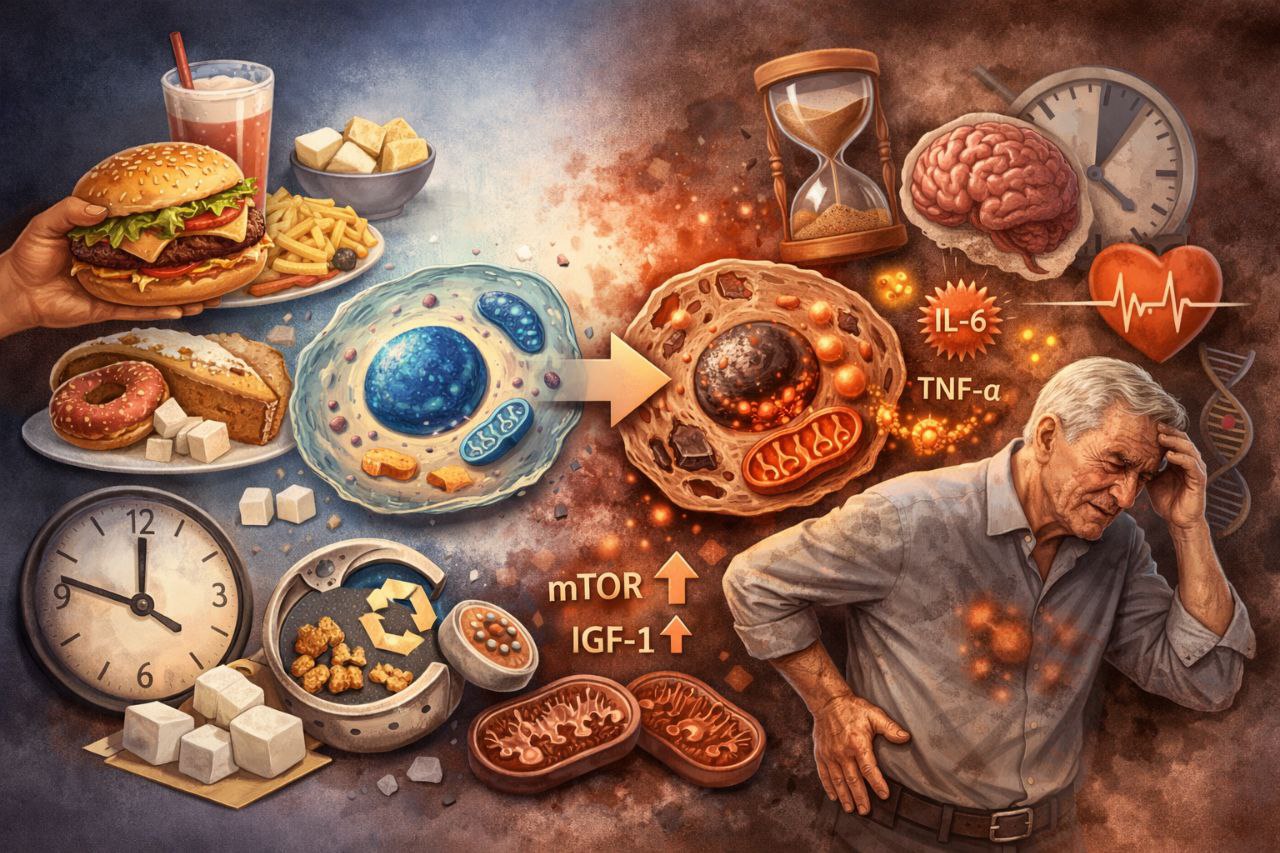
- the mTOR pathway is activated—the "growth pathway"
- autophagy is suppressed—cellular cleanup
- cells wear out faster
📌 In youth, growth is beneficial.
📌 After 35–40, constant growth = accelerated wear.
2. Suppression of Autophagy—The Main Rejuvenation Mechanism
Autophagy is:
- removal of damaged proteins
- cell cleanup
- mitochondrial renewal
It only activates during an energy pause.
If:
- eating is frequent
- calories are abundant
- snacking is constant
👉 autophagy barely starts.
Result:
- skin aging accelerates
- risk of neurodegeneration increases
- tissue recovery worsens
3. Chronic Inflammation—The "Silent Fire"
Energy excess, especially with excess fat, creates:
- constant background inflammation
- immune system overload
- damage to blood vessels and tissues
This condition is called inflammaging—inflammatory aging.
It:
- doesn't hurt
- isn't felt immediately
- but accelerates all age-related processes
4. Mitochondrial Wear—The Cell's Power Stations
The more calories:
- the higher the load on mitochondria
- the more side damage
- the worse the energy quality
Without deficit periods:
- old mitochondria aren't utilized
- new ones form worse
- overall body energy drops
Fatigue, "brain fog," slow recovery—often this isn't age, but eating without pauses.
What Exactly in Nutrition Accelerates Aging
Important: not just "what," but how.
Most problematic factors:
- constant snacking
- eating late in the evening
- excess of fast carbohydrates
- combination of fat + sugar
- absence of light hunger periods
📌 Even "healthy" food in excess is still excess.
What Can Be Changed Without Fanaticism
1. Restore Pauses Between Meals
Minimum:
- 3 meals
- without constant snacking
- 4–5 hour intervals
This already:
- reduces insulin
- starts autophagy
- improves metabolism
2. Stop Eating "Out of Habit"
Often we eat not because we're hungry, but because:
- it's time
- stress
- boredom
- "need to finish"
Useful question before eating:
Am I truly hungry or just used to eating now?
3. Reduce Calorie Density, Not Food Volume
Anti-aging approach isn't hunger, but:
- more vegetables
- sufficient protein
- moderate fats
- fewer empty calories
📌 Feeling full ≠ energy excess.
4. Shift Main Meal to First Half of Day
The body:
- utilizes calories better during the day
- worse—in the evening
Late heavy dinners:
- increase insulin resistance
- worsen sleep
- accelerate metabolic aging

5. Sometimes Allow Light Deficit
Not constantly, but periodically:
- slightly less than usual
- without snacks
- with a feeling of light hunger
This isn't harmful.
This is a natural evolutionary mode that the body is adapted to.
The Main Thing to Understand
Aging isn't accelerated by food itself, but by lack of pauses and constant excess.
The body needs:
- growth periods
- and recovery periods
Modern nutrition provides growth—but almost no recovery.

Short Summary
Chronic overeating:
- accelerates biological aging
- increases inflammation
- suppresses autophagy
- worsens mitochondrial function
- increases risk of age-related diseases
Changes don't require extreme diets.
They require rhythm, pauses, and moderation.