
In 2025, the Nobel Prize in Medicine was awarded for a discovery that answers a very simple but fundamental question: why doesn't the immune system usually attack itself? And what happens when this mechanism breaks down.
The Problem
The immune system is designed to protect us — from viruses, bacteria, cancer cells. But it's very powerful. And if it didn't have "brakes," it would constantly destroy our own organs.
In practice, we see that sometimes this is exactly what happens:
- type 1 diabetes
- rheumatoid arthritis
- multiple sclerosis
- inflammatory bowel disease
- severe allergies
For a long time, it wasn't fully understood what mechanism keeps the immune system in balance.
What Scientists Discovered
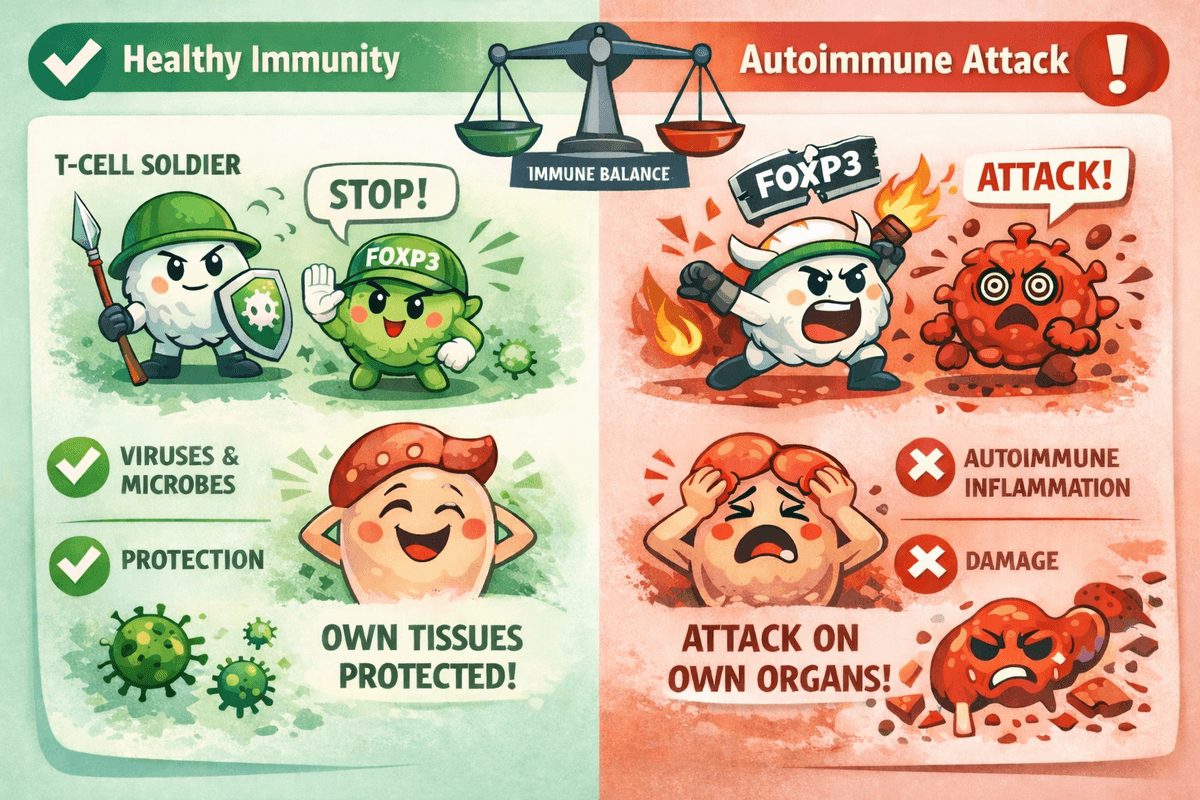
The scientists who received the Nobel Prize showed that the immune system has special controller cells. They're called regulatory T-cells.
To put it simply:
- regular immune cells are "soldiers"
- regulatory T-cells are officers and brakes at the same time
They:
- stop excessive aggression
- prevent the immune system from "overheating"
- signal that this is "self" and shouldn't be attacked
Why the FOXP3 Gene Matters
Scientists also found that these cells have a master control gene — FOXP3.
If it works normally:
- the immune system is balanced
- inflammation is under control
- the body doesn't fight itself
If it's broken:
- the immune system loses its brakes
- severe autoimmune reactions develop
- in children, this can lead to extremely serious, sometimes fatal diseases
This became direct proof that this mechanism is critically important for life.
Fact: The discovery of the FOXP3 gene and its role in immune regulation became a key moment in understanding autoimmune diseases.
Why This Discovery Is So Important
Because it changed the approach to treating diseases.
The old logic was simple:
Immune system too active → suppress it entirely
Hence:
- hormones
- strong immunosuppressants
- lots of side effects
Now the approach is changing:
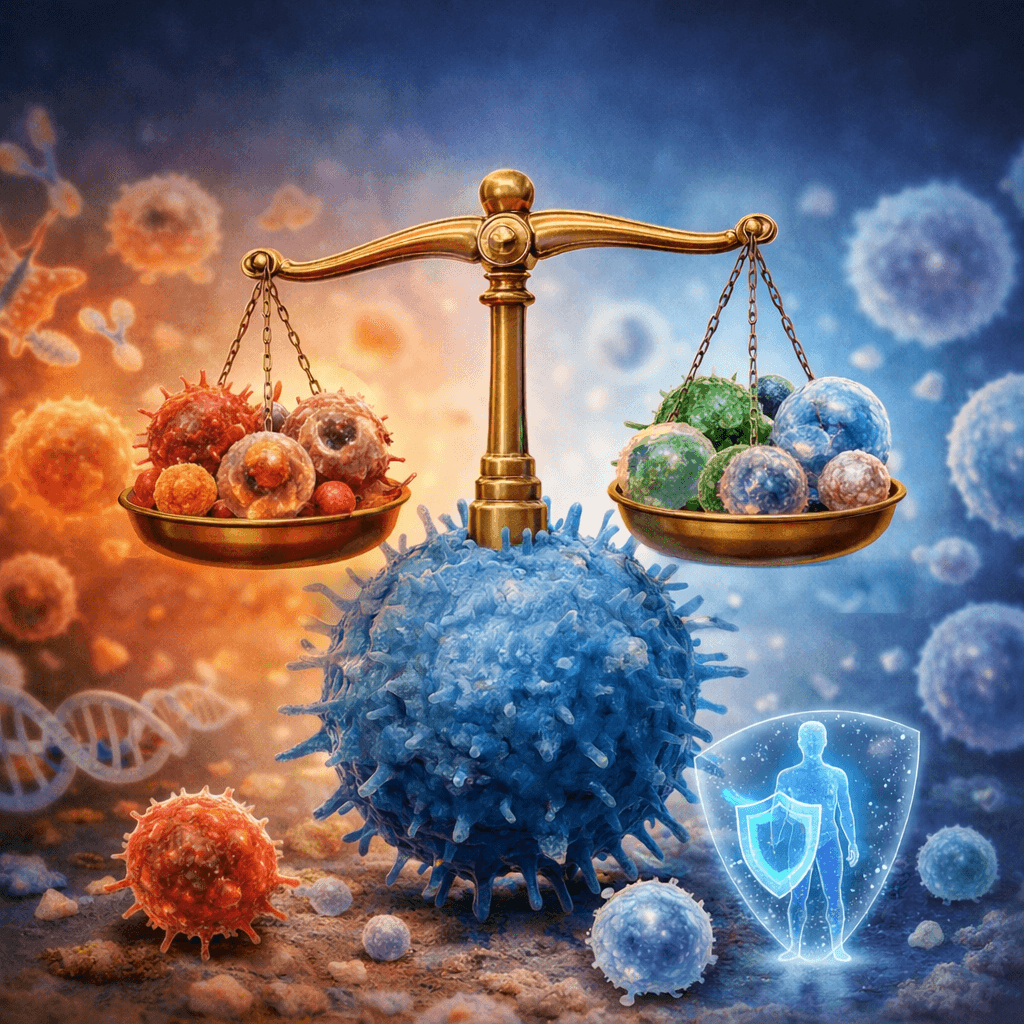
Not "turn off the immune system," but tune it.
Practical Applications — Coming in the Near Future
1. Autoimmune Diseases
Instead of broadly suppressing immunity:
- learning to enhance regulatory T-cells
- restoring immune balance precisely
This means:
- fewer side effects
- fewer infections
- more long-term effectiveness
Some such methods are already in clinical trials.
Tip: New treatments for autoimmune diseases based on T-cell regulation may appear in clinical practice within the next 5–10 years.
2. Organ Transplantation
The main problem with transplantation is rejection.
The future idea:
Not "suppress" immunity for life, but teach it to recognize the transplanted organ as "self."
Regulatory T-cells are the key to this. If successful, this will radically change transplantation medicine.
3. Oncology
Here the situation is reversed. Sometimes regulatory T-cells prevent the immune system from attacking the tumor.
So now they're studying how to:
- temporarily weaken them in the tumor area
- so the immune system can better destroy cancer cells
This is an important direction in modern immunotherapy.
Important: Working with regulatory T-cells in oncology requires a very precise approach — they need to be weakened only in the tumor area without disrupting the overall immune balance.
The Main Point
The 2025 Nobel Prize isn't about abstract theory. It's about understanding the fine-tuning of immunity:
- when it needs to be restrained
- and when, on the contrary, it needs to be released
This discovery:
- explained the nature of autoimmune diseases
- laid the foundation for new, more precise treatment methods
- and will influence medicine for decades to come
Takeaway: Understanding how regulatory T-cells and the FOXP3 gene work opens the path to personalized medicine, where treatment will be tailored to each person's specific immune system imbalance.