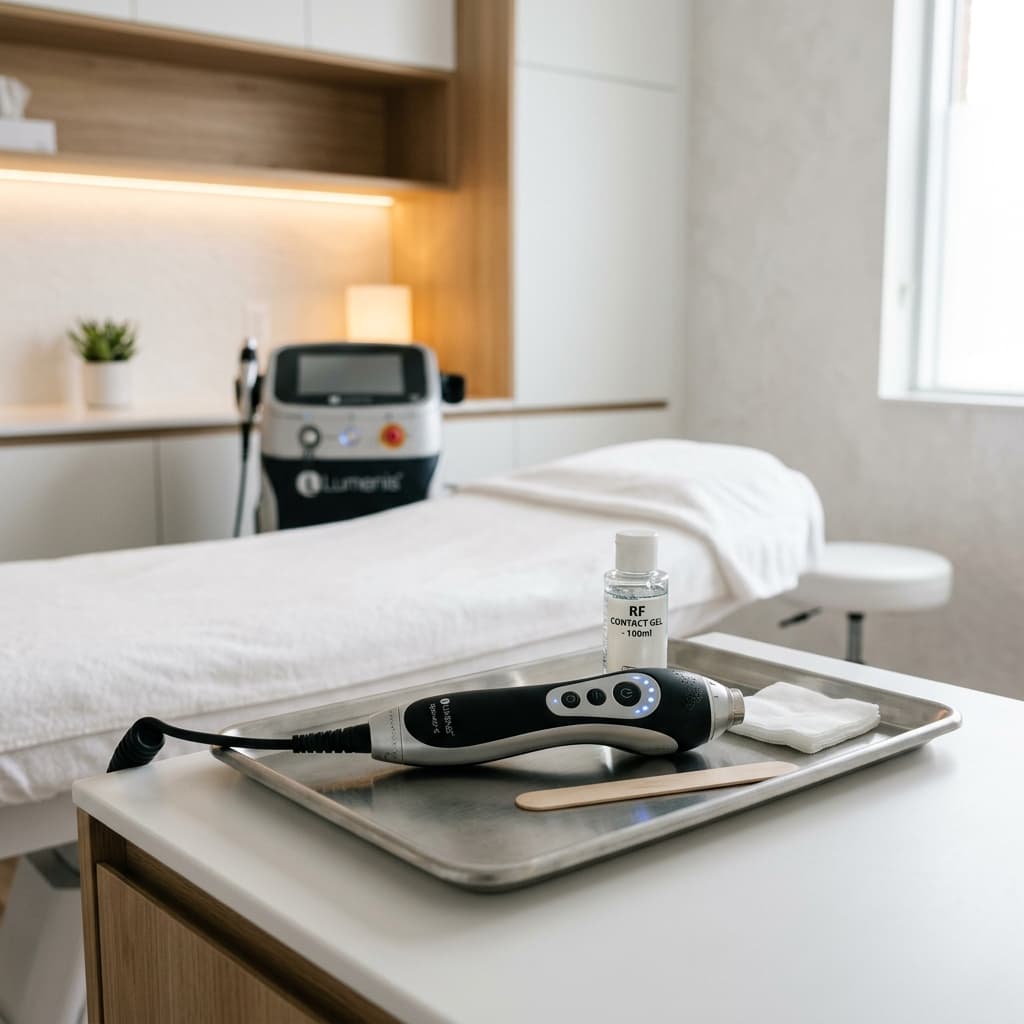
Facial aging rarely starts with deep wrinkles. In most cases, age is perceived through more subtle but characteristic changes in the skin and underlying soft tissues. Below are five signs that tend to appear first, along with realistic correction options and their degree of reversibility.
1. Pigmentation, Visible Blood Vessels, and Uneven Skin Tone
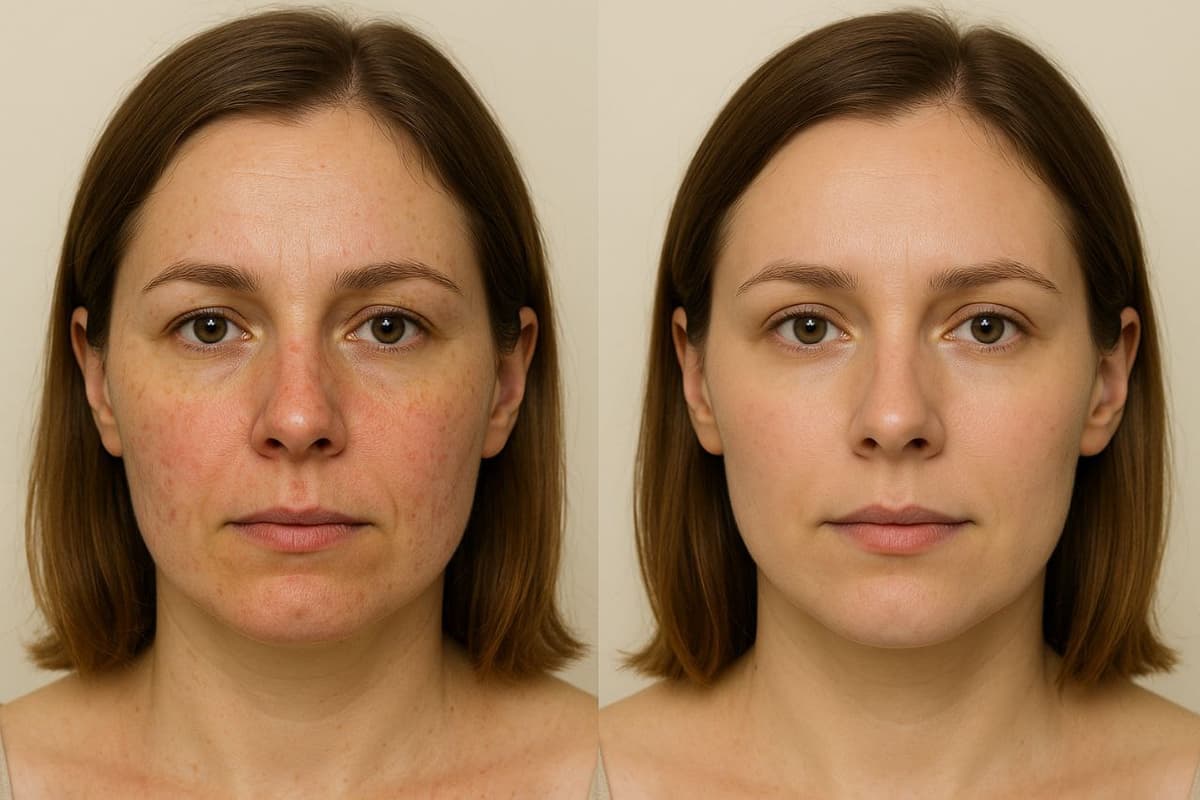
This is one of the earliest and most noticeable markers of aging. Even without wrinkles, an uneven complexion can make the face look older.
Why it happens:
- photoaging (UV exposure);
- slowed cell turnover;
- fragile and dilated capillaries;
- chronic skin inflammation.
How it appears:
- dark spots and hyperpigmentation;
- redness, broken capillaries (rosacea);
- a dull, tired-looking complexion.
Reversibility: high.
Correction options:
- daily sun protection (SPF is critical);
- skincare with vitamin C, niacinamide, and retinoids;
- chemical peels;
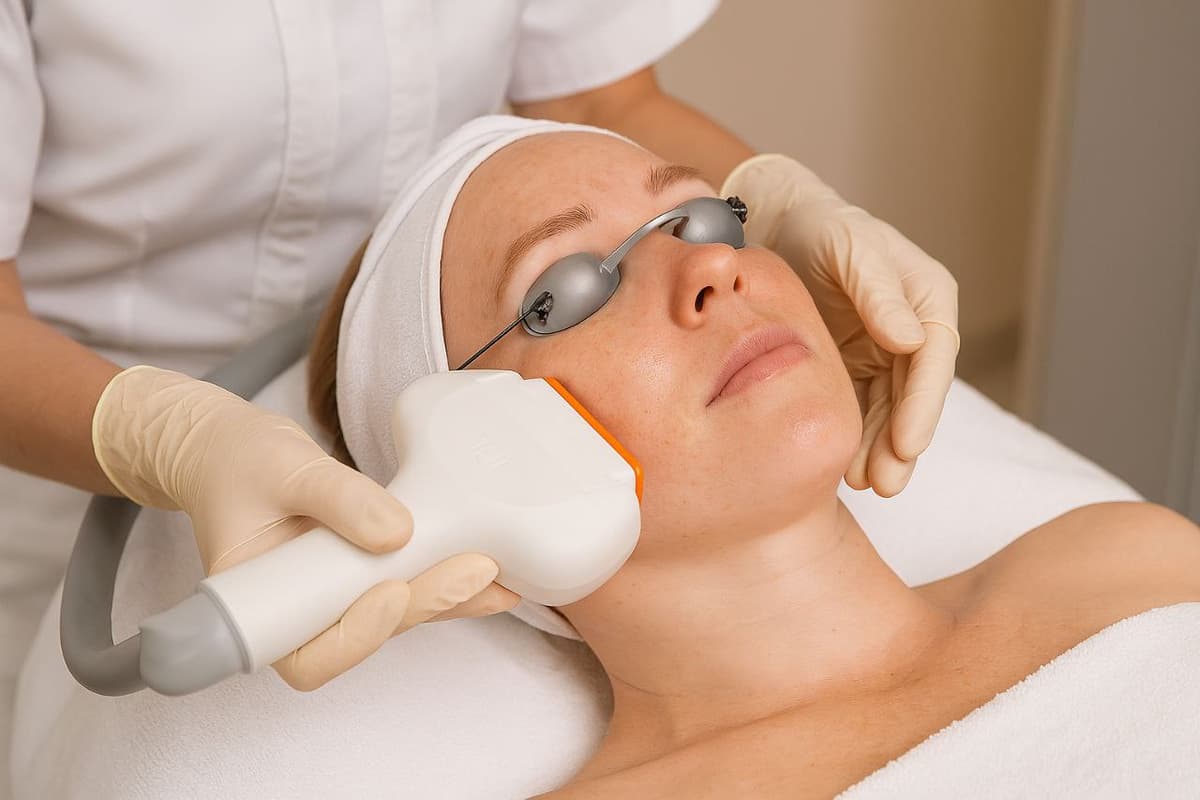
- laser and IPL treatments for pigmentation and vascular issues.
Tip: SPF not only prevents new damage but also allows the skin to recover. Use it even on cloudy days.
2. Loss of Skin Firmness and Elasticity
Even without visible wrinkles, the skin may appear lax, which is immediately perceived as a sign of aging.
Why it happens:
- decreased collagen and elastin production;
- thinning of the dermis;
- slower tissue regeneration.
How it appears:
- skin loses its ability to hold shape;
- early signs of sagging (ptosis);
- reduced definition of facial contours.
Reversibility: partial.
Correction options:
- retinoids and collagen-stimulating skincare;
- energy-based treatments (RF lifting, ultrasound);
- injectable collagen stimulators;
- adequate protein intake and a healthy lifestyle.
A full return to youthful skin density is not possible, but tissue quality can be significantly improved.
Fact: Collagen breakdown accelerates after age 25. Consistent use of retinoids can slow this process by 30–40%.
3. Expression Lines (Dynamic Wrinkles)
Facial expressions are natural, but they are also one of the earliest contributors to aging.
Why they appear:
- active facial movements;
- dehydration;
- reduced skin elasticity.
How they appear:
- crow's feet around the eyes;
- horizontal forehead lines;
- frown lines between the eyebrows.
Reversibility: partial.
Correction options:
- hydrating and barrier-repair skincare;
- botulinum toxin treatments (when indicated);
- retinoids and peptides for skin support;
- addressing habitual facial tension.
At early stages, these lines can often be smoothed almost completely.
Important: Botulinum toxin treatments are effective only with proper dosing and technique. Always consult a licensed and certified professional.
4. Enlarged Pores and Uneven Skin Texture
This sign is often underestimated, even though it significantly affects how fresh the face looks.
Why it happens:
- decreased skin tone;
- hyperkeratosis;
- age-related changes in sebaceous glands.
How it appears:
- pores become more visible;
- skin loses smoothness;
- makeup sits less evenly.
Reversibility: high to partial.
Correction options:
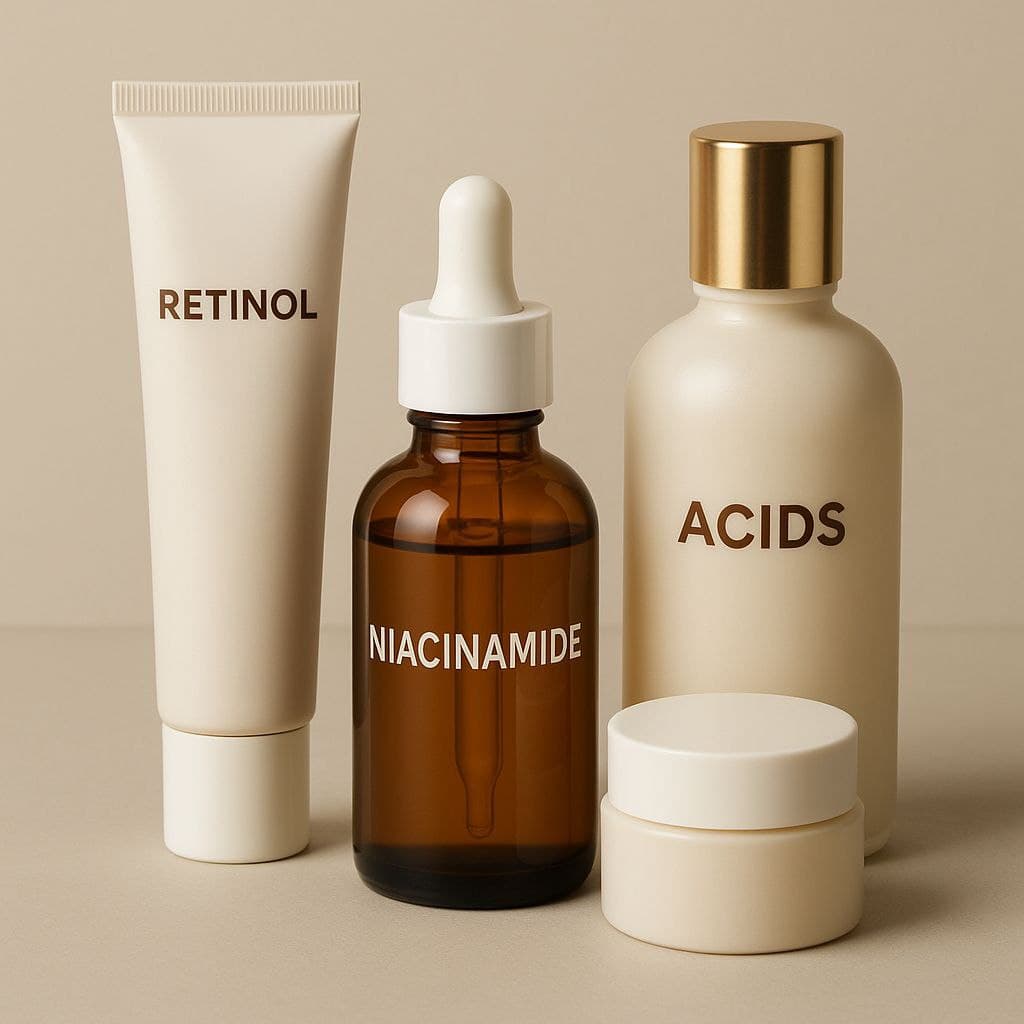
- retinoids and exfoliating acids;
- niacinamide;
- professional chemical peels;
- laser resurfacing for texture refinement.
Pores cannot be "closed," but their appearance can be noticeably minimized.
Tip: Niacinamide at 5–10% works as a "visual pore refiner," improving skin texture within 4–6 weeks of consistent use.
5. Puffiness or, Conversely, Volume Loss (Especially in Lean Faces)
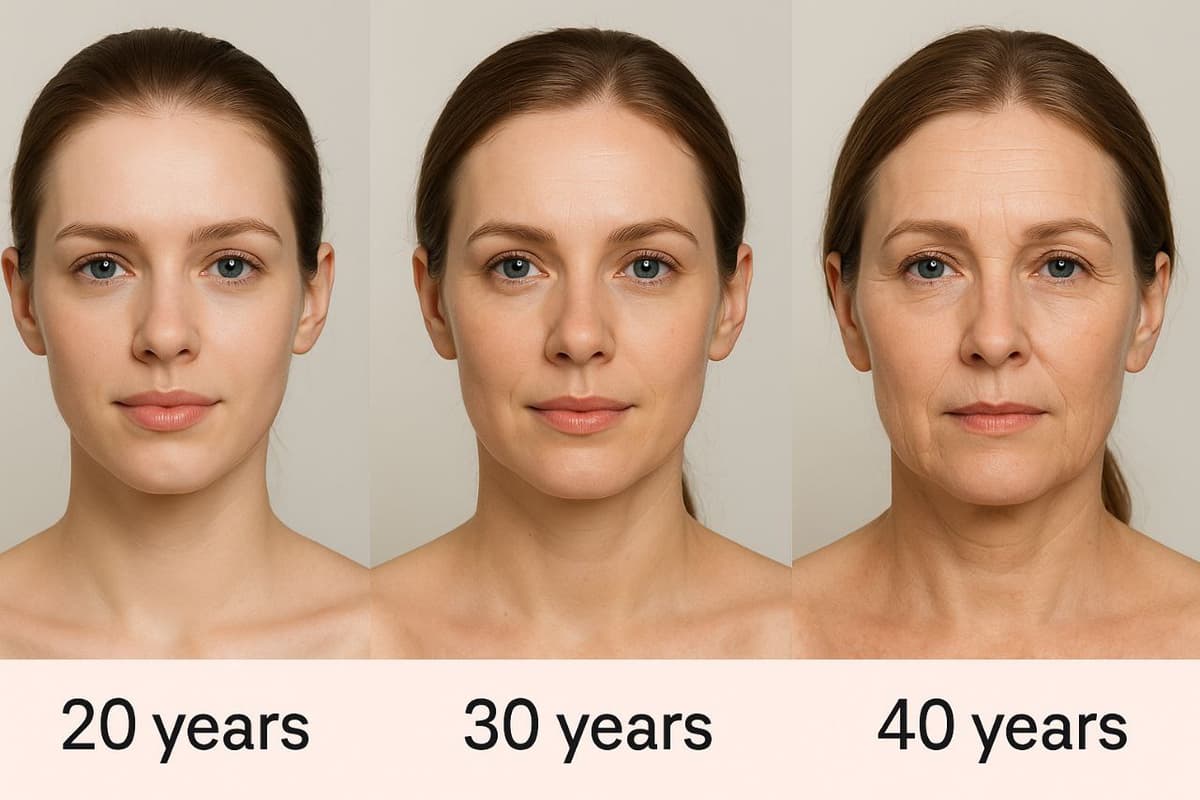
Changes in facial volume are among the most characteristic signs of aging.
Why it happens:
- impaired lymphatic drainage (puffiness);
- age-related fat loss;
- individual aging patterns.
How it appears:
- swollen, heavy-looking face;
- hollow cheeks and pronounced nasolabial folds;
- a tired appearance even with healthy skin.
Reversibility:
- puffiness — partially reversible;
- volume loss — irreversible without intervention.
Correction options:
- lymphatic drainage, massage, lifestyle adjustments;
- managing salt intake and sleep habits;
- injectable treatments for volume loss, when indicated.
Important: Morning puffiness may be related not only to aging but also to kidney, heart, or hormonal issues. Persistent swelling should be evaluated by a physician.
Summary
Skin tone, texture, and pigmentation are the most reversible signs of aging. With proper skincare and professional treatments, visible improvement can often be seen within 2–3 months.
Expression lines and firmness require ongoing maintenance. Results depend on consistency and individual skin characteristics.
Changes in facial volume demand a highly personalized approach and typically require professional correction.
Remember: A well-designed anti-aging strategy does not start with fighting wrinkles, but with restoring skin quality and tissue balance. Begin with basic skincare, daily sun protection, and a professional consultation—this is the foundation for long-term results.