
Important: this article is for education only. It is not a recommendation to get, avoid, or choose botulinum toxin injections. Any decision should be made by the individual after an in-person consultation with a qualified, licensed medical professional. Botulinum toxin is a prescription medication, not a regular beauty service.
In everyday conversation, people often say “Botox” when they mean any cosmetic botulinum toxin treatment. Strictly speaking, Botox Cosmetic is a brand name. The broader category includes several neuromodulators that temporarily reduce muscle activity and, in the right setting, soften expression lines.
By 2026, the conversation has moved well beyond “forehead wrinkle shots.” Patients are asking for softer movement, neck and jawline treatments, micro-dose techniques, and longer-lasting or newer toxin options. At the same time, regulators have been warning about counterfeit or unapproved products and unsafe self-injection.
What botulinum toxin actually does
Botulinum toxin temporarily blocks the signal between a nerve and a muscle. When a targeted muscle contracts less forcefully, the skin above it creases less, and dynamic lines can look softer. This is why the best-established cosmetic uses involve expression lines such as frown lines, forehead lines, and crow's feet.
It is just as important to understand what it does not do. Botulinum toxin does not replace filler, surgery, lasers, retinoids, or sunscreen. It does not rebuild collagen in a direct way. Its main job is to manage muscle movement. That means results depend heavily on anatomy, dose, injection placement, product choice, and the patient's goals.
What feels different in 2026
The cosmetic toxin market is more complex than it used to be. There are more FDA-approved products in the U.S., more off-label uses outside official product labeling, and more social media language around “preventative Botox,” “microbotox,” “skin Botox,” and facial slimming.
Newer approvals and updated labels matter because they show where formal clinical testing and regulatory review exist. For example, the FDA has approved LETYBO for temporary improvement of moderate to severe glabellar lines, meaning frown lines between the brows, in adults. Botox Cosmetic labeling has also been updated to include aesthetic use for vertical platysma bands, often called neck bands.
That does not mean every toxin, dose, or treatment area is interchangeable. The better question in 2026 is not “Should I get Botox?” but “Which product, for which area, for what goal, with what evidence and risk profile?”
Trend 1. Softer results and preserved expression
One major shift is the move away from a completely frozen look. Many patients now want to look less tense or more rested while still being able to show expression. That requires more than simply using fewer units. A skilled injector has to think about muscle balance, brow position, asymmetry, and how one muscle group compensates when another is relaxed.
This is not a separate miracle technique. It is a more precise aesthetic goal: soften strong creasing without erasing the face. It can be especially relevant for people with very active expression, thin skin, low brows, or a history of heavy-looking results.
Trend 2. Neck bands and the lower face
The neck has become a bigger part of the cosmetic toxin conversation. Vertical platysma bands, the jawline, and tension in the lower face are common concerns, especially when the face looks smoother than the neck.

This area requires caution. The platysma is involved in movement of the lower face and neck, and nearby structures matter for speech and swallowing. Neck treatment is not a casual add-on and should not be done by someone who cannot clearly explain the anatomy, risks, and plan.
For a patient, the practical takeaway is simple: neck toxin treatment belongs in a medical setting, with a trained clinician, using an appropriate product from a legitimate supply chain.
Trend 3. Masseter injections and facial slimming
Masseter treatment is another highly visible topic. It may be discussed for enlarged jaw muscles, clenching, grinding, or a square-looking lower face. In cosmetic settings, the goal is often to soften jaw width.
The distinction between medical and aesthetic reasons matters. If someone has jaw pain, tooth wear, headaches, or nighttime clenching, a dentist or another medical professional may need to be involved. If the goal is purely cosmetic, the tradeoffs should still be clear: possible chewing weakness, smile changes, asymmetry, or a lower face that looks less supported in the wrong candidate.
Trend 4. Microbotox and skin-quality claims
Microbotox, skin Botox, or intradermal botulinum toxin usually refers to very small amounts placed more superficially than standard muscle-targeting injections. Online, it is often promoted for shine, pores, fine texture, oiliness, and a “glass skin” effect.

This is where expectations should be especially careful. The evidence base for classic expression-line treatment is stronger than the evidence for broad skin-quality claims. Review articles and expert discussions describe the technique, but that does not make it a universal replacement for acne treatment, rosacea care, pigment management, lasers, retinoids, or daily sun protection.
If the main concern is skin texture or glow, the most honest consultation may include options that are not toxin-based at all.
Trend 5. Preventative Botox in younger adults
Preventative Botox is one of the most debated aesthetic trends. The idea is to reduce repeated muscle folding before dynamic lines become etched in at rest. In selected people with very strong expression patterns and early lines, a clinician may see a rationale.
But “young” is not a medical indication. When there are no meaningful dynamic lines, prevention can easily become marketing. If the biggest drivers of skin aging are UV exposure, smoking, poor sleep, stress, or inconsistent sunscreen use, injections will not fix the foundation.
For younger adults, the more evidence-based anti-aging basics still sound unglamorous: sunscreen, not smoking, sleep, gentle skin care, and realistic expectations.
What is well supported and what is still uncertain
The strongest cosmetic evidence for botulinum toxin is temporary improvement of expression lines in established treatment areas, especially glabellar lines, forehead lines, and crow's feet. There are clinical trials, product labels, and decades of real-world use behind these indications.
The evidence becomes less straightforward when claims shift toward “lifting the whole face,” “replacing skin care,” “shrinking pores,” or “preventing aging for everyone over 25.” Some off-label uses may be reasonable in expert hands, but the certainty is not the same as it is for classic dynamic wrinkle treatment.
That distinction matters because a good cosmetic decision is not just about whether a procedure can work. It is about whether it is the right tool for the actual problem.
Safety: why the source of the product matters
The most important safety story in recent years has not been about trend names. It has been about counterfeit, mishandled, unapproved, or self-injected products. CDC reported harmful reactions linked to counterfeit or improperly administered botulinum toxin injections, and FDA continues to warn sellers of unapproved injectable toxin products.
This is not a minor paperwork issue. An unapproved or counterfeit product may contain the wrong amount of active ingredient, be contaminated, be mislabeled, or lack the quality controls expected for approved prescription medications. Buying toxin online or having it injected outside an appropriate medical setting increases risk.

Warning signs that require urgent medical care after an injection include trouble swallowing or breathing, severe weakness, slurred speech, double vision, drooping eyelids, or signs of a serious allergic reaction. These events are uncommon, but they are serious enough that botulinum toxin should never be treated like a casual beauty appointment.
Questions to ask before treatment
The most useful pre-treatment questions are not only about price or how long the result will last. They are about medical judgment.
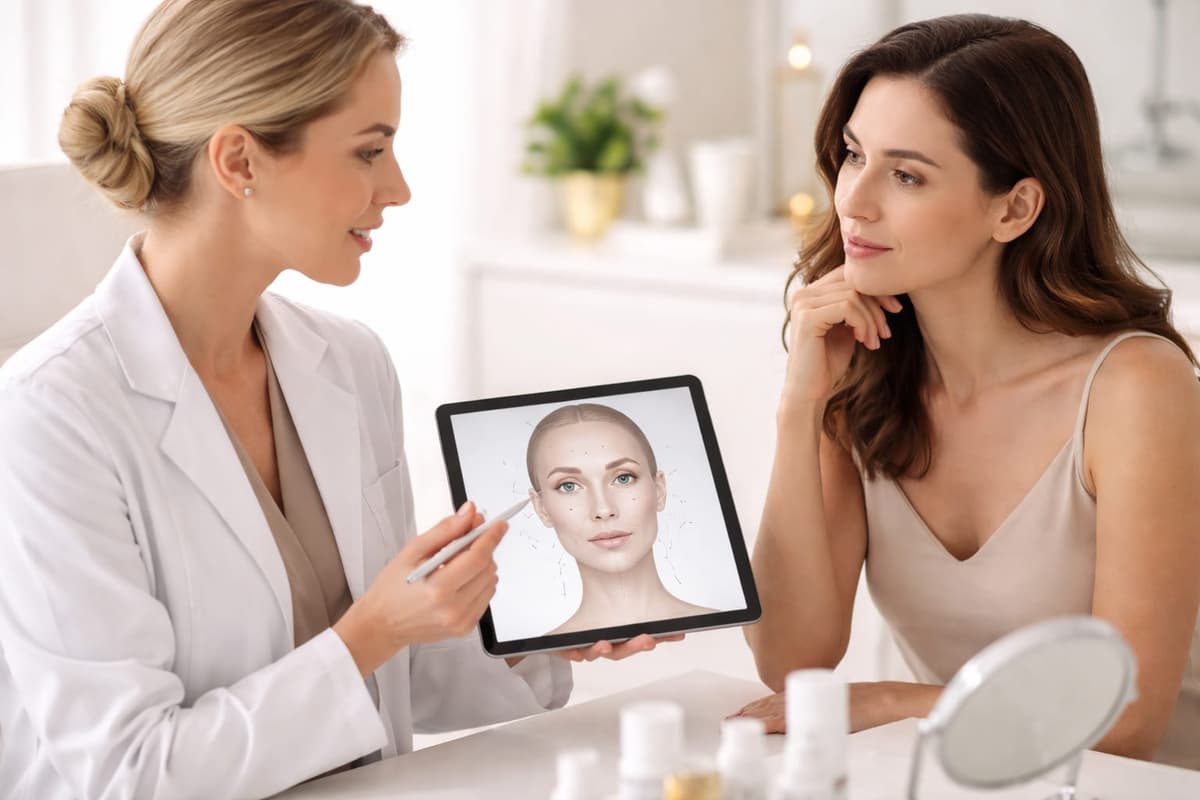
- What exact product will be used, and is it approved in this country?
- Are you licensed and trained to perform injections in this treatment area?
- What problem are we treating: movement lines, asymmetry, neck bands, masseter size, sweating, or something else?
- Is this an approved indication or an off-label use?
- What side effects are most relevant to my anatomy?
- What should I do if the result is too strong, uneven, or concerning?
- Which medications, medical conditions, or prior procedures should affect the plan?
If the provider cannot answer these questions calmly and clearly, that is a reason to pause.
Who should be extra cautious
People with neuromuscular disorders, pregnancy, breastfeeding, active infection at the injection site, a history of serious allergic reactions, or medications that affect neuromuscular transmission need particular caution. This is not a complete contraindication list. It is a reminder that a medical history matters, even for an aesthetic visit.
It is also important to tell the clinician about previous injections, surgeries, medications, chronic conditions, and past bad reactions. Those details can change the risk-benefit conversation.
Bottom line
Botulinum toxin remains one of the most studied tools in cosmetic dermatology for expression lines. But in 2026, the surrounding conversation is more complicated: more products, more treatment areas, more social media claims, and more safety warnings about unapproved sources.
The most balanced approach is not to follow a trend or reject the procedure automatically. It is to identify the actual concern, understand the evidence, weigh the risks, and discuss alternatives with a qualified medical professional. For one person, toxin may be a subtle, appropriate choice. For another, it may be unnecessary or simply the wrong tool.
Sources
- FDA: BOTOX Cosmetic prescribing information, 2024
- FDA: Drug Trials Snapshot — LETYBO
- FDA: warning letter about unapproved injectable botulinum toxin products, April 2026
- CDC: harmful reactions linked to counterfeit or mishandled botulinum toxin injections
- CDC: how to stay safe when getting botulinum toxin injections, 2025
- PubMed: JAMA Dermatology randomized trial comparing botulinum toxin A formulations, 2025
- Cochrane review on botulinum toxin for facial wrinkles
- PMC: Aesthetic Surgery Journal review on microtoxin and intradermal botulinum toxin